Best Kinder's Seasoning for Chicken: 7 Blends That Deliver
From grilled breasts to wings and thighs, discover which Kinder's seasonings transform boring chicken into restaurant-quality meals every time.
Chicken is America's most-cooked protein—and also the easiest to ruin. Dry breasts, bland thighs, wings that taste like cardboard. The difference between forgettable chicken and the kind people ask for the recipe? Almost always the seasoning. Kinder's has built a cult following by solving exactly this problem, and if you're wondering which blend works best for chicken, you're in the right place.
This guide breaks down the seven best Kinder's seasonings for chicken, what makes each one work, and exactly how to use them whether you're grilling, baking, air frying, or pan-searing. No fluff, no filler—just the blends that consistently deliver juicy, flavorful chicken.
Why Kinder's Seasonings Work So Well on Chicken
Before we dive into individual blends, it's worth understanding why Kinder's has become the go-to for home cooks and pitmasters alike. Most grocery store seasonings are either all salt or so mild they disappear on the plate. Kinder's strikes a different balance.
Every blend combines salt, sugar, and fat-soluble flavor compounds (usually in the form of butter powder or rendered fats) that create what chefs call "layered" flavor. When you season chicken and apply heat, those fats melt, the sugars caramelize, and the salt penetrates the meat. The result is chicken that tastes seasoned all the way through, not just on the surface.
Kinder's also uses MSG and disodium inosinate in many blends—both naturally occurring umami compounds that amplify savory flavor without adding more salt. If you've ever wondered why restaurant chicken tastes better than yours, umami boosters are often the secret.
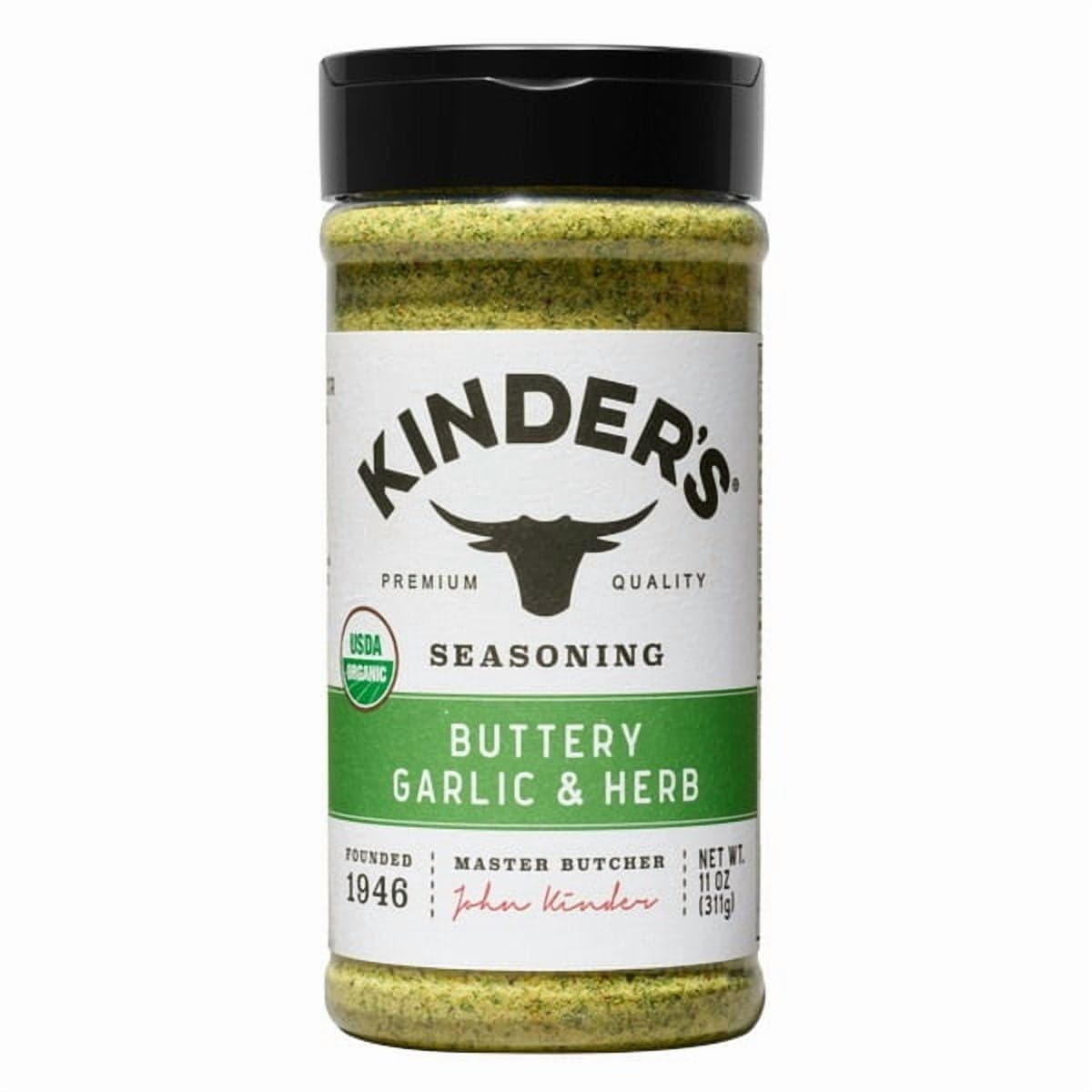
1. Kinder's Buttery Garlic and Herb: The Weeknight MVP
If you only keep one Kinder's seasoning in your pantry for chicken, make it Kinder's Buttery Garlic and Herb Seasoning. This USDA Organic blend is the workhorse that handles grilled breasts, roasted thighs, weeknight sheet pans, and meal-prep bowls without ever feeling boring.
The flavor profile is exactly what the name promises: rich butter, roasted garlic, and a mix of parsley, thyme, and oregano. It's savory without being aggressive, which means it plays well with almost any side dish or sauce you pair it with.
Best uses for Buttery Garlic and Herb
- Grilled chicken breasts: Coat with olive oil, season generously on both sides, grill over medium-high heat until internal temp hits 160°F. Let rest 5 minutes.
- Sheet pan chicken thighs: Toss bone-in, skin-on thighs with seasoning and roast at 425°F for 35–40 minutes. The butter powder helps the skin crisp up beautifully.
- Rotisserie-style whole chicken: Rub under and over the skin, roast at 375°F until the thigh reaches 165°F. Tastes like you spent an hour prepping a compound butter.
- Air fryer wings: Toss dry wings in the seasoning (no oil needed), air fry at 400°F for 22 minutes, flipping halfway. They come out crispy and restaurant-quality.
Because it's USDA Organic, this blend also works if you're cooking for people who avoid synthetic additives but still want big flavor.
2. Kinder's Roast Chicken Garlic & Herbs: Purpose-Built Perfection
If Buttery Garlic and Herb is the versatile everyday player, Kinder's Roast Chicken Garlic & Herbs is the specialist. This blend was designed specifically for whole roasted chicken and bone-in cuts, and it shows.
The seasoning leans heavier on sage, rosemary, and thyme—the classic "Sunday roast" aromatics—and includes onion and paprika for depth. The flavor is more concentrated than Buttery Garlic and Herb, so you use slightly less per pound of meat.
When to choose Roast Chicken over Buttery Garlic and Herb
Use Roast Chicken when you want chicken to be the star of the plate, not just a protein. Think holiday dinners, meal-prepped rotisserie thighs for the week, or any time you're serving chicken with simple sides like roasted vegetables or mashed potatoes. The stronger herb presence stands up to longer cooking times without fading.
Pro tip: Mix this seasoning with softened butter (1 tablespoon seasoning per 4 tablespoons butter) and rub it under the skin of a whole chicken before roasting. The butter bastes the meat from the inside while the skin crisps up on the outside.
3. Kinder's Grilled Chicken Seasoning: The Backyard Classic
Straight-up named, zero confusion. Kinder's Grilled Chicken Seasoning is what you reach for when you're firing up the grill and want that char-grilled, slightly smoky flavor without needing a smoker or special technique.
This blend includes smoked paprika, black pepper, garlic, and a touch of cayenne for warmth. It's designed to enhance—not mask—the natural flavor of chicken, which makes it ideal for bone-in cuts and anything cooked over direct heat.
Best applications
- Grilled drumsticks and thighs: Season liberally, grill over medium heat (350–375°F) turning every 5 minutes until skin is crispy and internal temp is 175°F.
- Spatchcock chicken: Flatten the bird, season both sides, grill skin-side up for 35–45 minutes. The even thickness ensures everything cooks at the same rate.
- Chicken kabobs: Toss cubed thighs in oil and seasoning, skewer with vegetables, grill over high heat for 10–12 minutes.
The smoke notes in this blend mean it also works well in a cast-iron skillet if you don't have access to a grill. Just crank the heat, get a good sear, and finish in a 400°F oven.
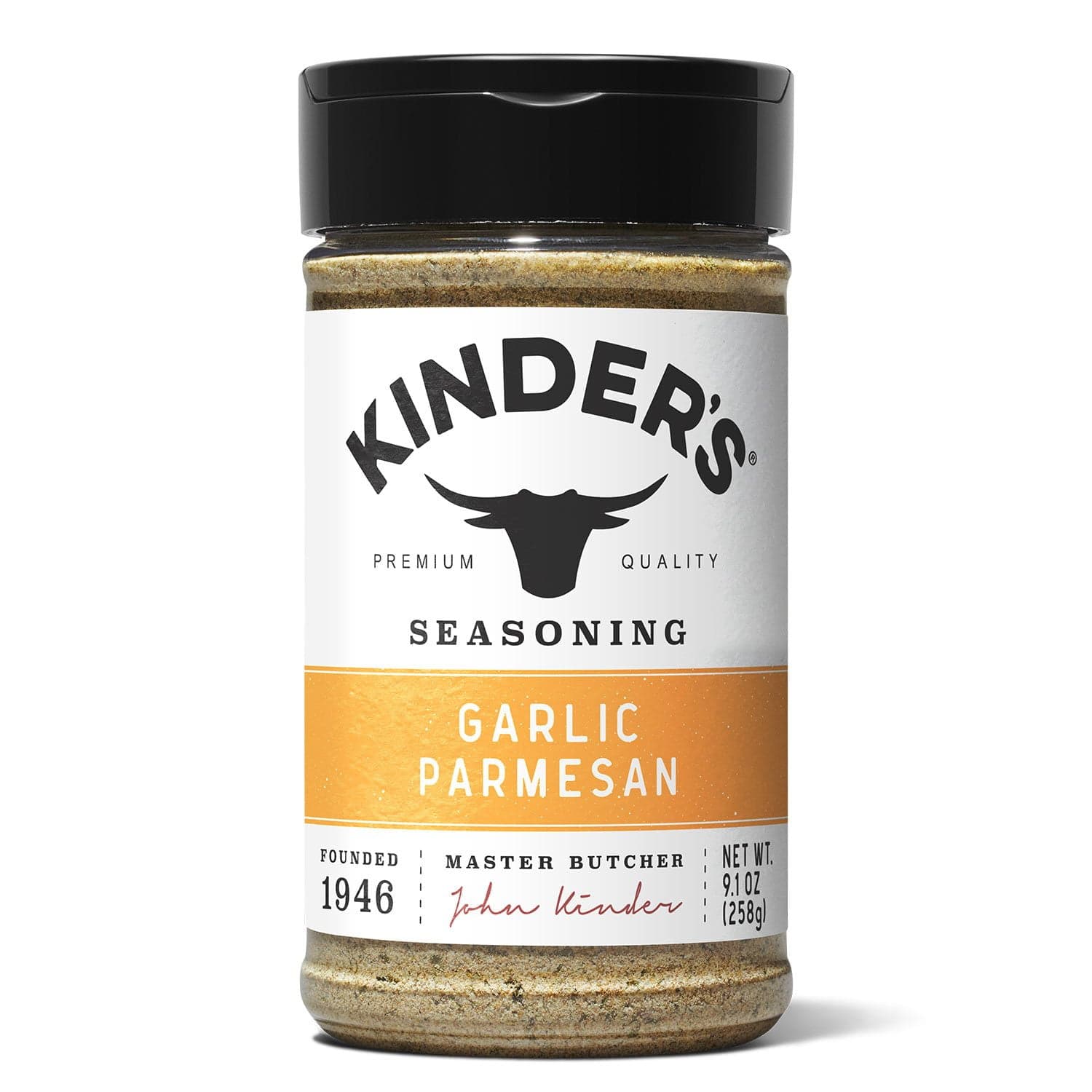
4. Kinder's Garlic Parmesan: For Wings and Tenders
Let's talk wings. Kinder's Garlic Parmesan Seasoning is a dry rub that delivers the flavor of saucy garlic parm wings without the mess or the need for a deep fryer. It's also a cheat code for chicken tenders, nuggets, and popcorn chicken.
The blend combines aged parmesan, roasted garlic, black pepper, and butter powder. When you toss hot chicken in it, the butter melts slightly and the cheese gets sticky—creating that addictive coating you'd normally get from tossing wings in butter and parm.
How to use it
The trick with Garlic Parmesan seasoning is to apply it after cooking, not before. Season your wings or tenders lightly with salt and pepper, cook them until crispy (grill, bake, air fry—your call), then toss the hot chicken in a bowl with 2–3 tablespoons of the seasoning. The residual heat activates the cheese and butter powder, coating every piece evenly.
This method works for:
- Baked wings (425°F for 40 minutes, flipping halfway)
- Air fryer tenders (400°F for 12 minutes)
- Grilled boneless thighs (slice thin, grill hot and fast, toss in the seasoning)
If you want to go next-level, melt 2 tablespoons of butter, toss the cooked chicken in the butter first, then toss in the Garlic Parmesan seasoning. That's the wing-joint method.
5. Kinder's Lemon Butter Dill: Bright, Fresh, and Underrated
Most Kinder's seasonings lean savory and rich. Kinder's Lemon Butter Dill goes a completely different direction—and it's perfect when you want chicken that feels light, fresh, and almost Mediterranean.
The seasoning combines lemon peel, dill, butter powder, garlic, and a hint of black pepper. It's bright without being acidic, herbal without tasting like a salad, and works especially well on white-meat chicken that can taste bland on its own.
Where it shines
This is your spring and summer chicken seasoning. Use it for:
- Grilled chicken breasts over salad: Season and grill, slice thin, serve over mixed greens with a lemon vinaigrette. The seasoning amplifies the dressing instead of fighting it.
- Baked chicken with vegetables: Season breasts or thighs, roast on a sheet pan with asparagus, zucchini, and cherry tomatoes at 400°F for 25 minutes.
- Chicken skewers with yogurt sauce: Marinate cubed chicken in olive oil and the seasoning for 30 minutes, grill, serve with tzatziki or a lemon-garlic yogurt dip.
The lemon and dill also make this a great choice for meal prep. Chicken seasoned with heavier blends can taste one-note by day three; Lemon Butter Dill stays interesting all week.
6. Kinder's Woodfired Garlic: When You Want Bold Garlic Flavor
If you're the kind of person who doubles the garlic in every recipe, Kinder's Woodfired Garlic was made for you. This blend uses roasted garlic, smoked sea salt, butter powder, and black pepper to deliver intense, nearly sweet garlic flavor with a hint of smoke.
It's more aggressive than Buttery Garlic and Herb, which makes it ideal for bone-in, skin-on cuts that can handle big flavor. Think thighs, drumsticks, wings, and quarters—not delicate breasts.
Best techniques
- Slow-roasted thighs: Season generously, roast at 375°F for 45–50 minutes. The long cook time mellows the garlic and crisps the skin.
- Smoked chicken quarters: Season and smoke at 250°F for 2 hours. The woodfired notes in the seasoning layer perfectly with real smoke.
- Cast-iron seared thighs: Season and sear skin-side down in a hot skillet for 6 minutes, flip, finish in a 400°F oven for 10 minutes. The fond left in the pan makes an incredible garlic pan sauce.
This seasoning also works as a finisher. Roast plain chicken, then brush with melted butter mixed with Woodfired Garlic in the last 5 minutes of cooking. The garlic toasts slightly and creates a crust.
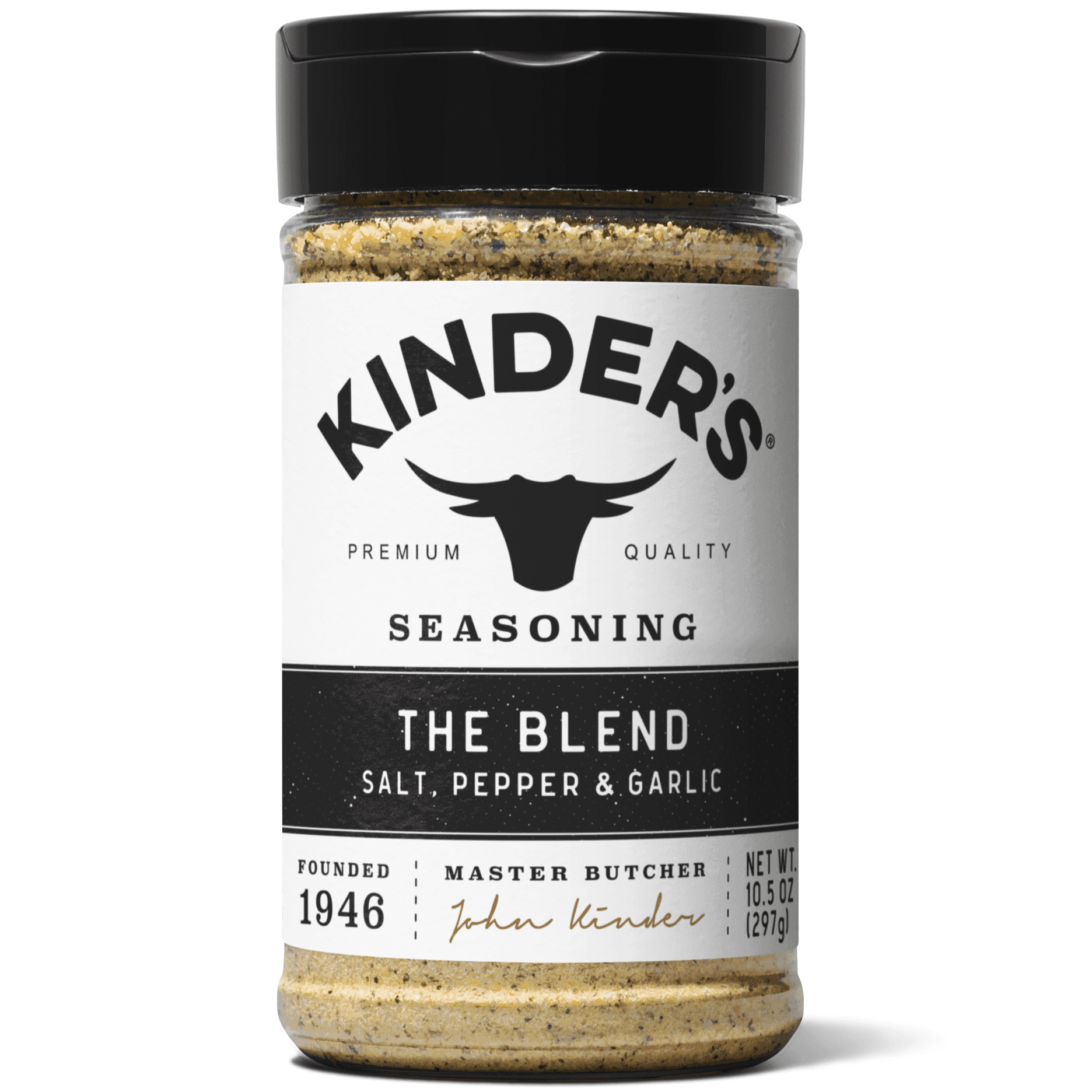
7. Kinder's The Blend: The Minimalist's Choice
Sometimes you don't want complexity. You just want chicken that tastes like really, really good chicken. That's where Kinder's The Blend comes in—a straightforward mix of salt, black pepper, and garlic.
It sounds basic, but the ratios are dialed in perfectly. You get enough salt to season properly, enough pepper to add bite, and enough garlic to make it interesting. No butter powder, no herbs, no smoke—just the essentials, done right.
When to use The Blend
Choose The Blend when:
- You're pairing chicken with a bold sauce (think BBQ, teriyaki, buffalo) and don't want competing flavors.
- You're grilling for a crowd with varied tastes. The Blend is universally likable.
- You're cooking a whole bird and want the chicken flavor—not the seasoning—to be the star.
- You're new to Kinder's and want a safe starting point. You can't go wrong with salt, pepper, and garlic.
The Blend is also the easiest to customize. Add cayenne for heat, mix in dried herbs for complexity, or use it as a base and finish with a flavored butter. It's the little black dress of chicken seasonings—works everywhere, never out of place.
How to Season Chicken Properly (Technique Matters)
Even the best seasoning won't save poorly seasoned chicken. Here's how to do it right, regardless of which Kinder's blend you choose.
Dry the chicken first
Pat the chicken completely dry with paper towels before seasoning. Water on the surface prevents seasoning from sticking and creates steam instead of a crust when you cook.
Use more seasoning than you think
A common mistake is under-seasoning. For bone-in, skin-on pieces, use about 1 tablespoon of seasoning per pound. For boneless, skinless breasts, use about 2 teaspoons per pound. The seasoning should visibly coat the surface.
Season in advance when possible
If you have time, season chicken 30 minutes to 2 hours before cooking and let it sit in the fridge uncovered. This dry-brines the meat, helping the salt penetrate deeper and the skin dry out (which means crispier results).
Don't forget the underside
Flip the chicken and season both sides. It sounds obvious, but in a rush it's easy to just season the top and call it good. The underside needs love too.
Pairing Kinder's Chicken Seasonings with Cooking Methods
Different blends work better with different techniques. Here's a quick reference guide.
Best for grilling
Grilled Chicken Seasoning, Woodfired Garlic, The Blend. These blends have enough boldness to stand up to char and smoke.
Best for baking and roasting
Buttery Garlic and Herb, Roast Chicken Garlic & Herbs, Lemon Butter Dill. The butter powder in these blends helps skin crisp up in the oven and keeps the meat moist.
Best for air frying
Garlic Parmesan, Buttery Garlic and Herb, Grilled Chicken Seasoning. Air fryers excel at crisping, so choose blends that complement that texture rather than relying on sauce.
Best for pan-searing and stovetop
The Blend, Woodfired Garlic, Buttery Garlic and Herb. These create great fond (the browned bits stuck to the pan) that you can deglaze into a quick pan sauce.
Common Mistakes When Seasoning Chicken
Let's troubleshoot the most frequent issues.
Seasoning burns before the chicken is done
This happens on the grill or in a hot skillet when the seasoning contains sugar (most Kinder's blends do). Solution: Use medium heat, not high. Or season after searing if you're doing a sear + oven finish.
Chicken tastes salty
You either over-seasoned or didn't account for the salt in a brine or marinade. If you brine chicken, use about half the normal amount of seasoning.
Seasoning doesn't stick
The chicken was too wet. Always dry it first. If you're seasoning skinless chicken, a very light coat of oil helps the seasoning adhere.
Flavor is one-dimensional
You might be using a blend that's too simple for the dish, or you forgot to season the inside of a whole bird. For complexity, try layering—use The Blend as a base, then add Lemon Butter Dill or Garlic Parmesan as a finish.
Final Verdict: Which Kinder's Seasoning Should You Buy?
If you're buying your first bottle, go with Buttery Garlic and Herb. It's the most versatile, works on every cut and every cooking method, and even people who claim they don't like garlic love it. It's also organic, which matters to some home cooks.
If you cook chicken more than twice a week, add Roast Chicken Garlic & Herbs and The Blend to your rotation. That trio covers 90% of chicken scenarios.
If you're big on wings or tenders, grab Garlic Parmesan. And if you love bold garlic or grill frequently, Woodfired Garlic and Grilled Chicken Seasoning are both worth the investment.
The truth is, you can't really go wrong. Kinder's quality control is consistent, the flavors are well-balanced, and every blend is designed to work on chicken specifically (or at least proteins in general). The worst-case scenario is you buy a blend you like slightly less than another—but you'll still eat better chicken than 90% of home cooks.
Ready to Upgrade Your Chicken Game?
Great chicken isn't about buying expensive cuts or complicated techniques. It's about seasoning properly and using blends that actually deliver flavor. Kinder's makes that easy, whether you're grilling for a crowd, meal-prepping for the week, or just trying to make Wednesday night dinner less boring.
Pick one or two blends that match how you cook most often, use them generously, and pay attention to technique. Your chicken will go from forgettable to the-reason-people-come-over-for-dinner. Start with the classics—Buttery Garlic and Herb or Roast Chicken—and expand from there. Once you dial in a blend you love, chicken stops being a chore and starts being something you actually look forward to cooking.
Shop the products mentioned in this article
Free shipping on every order. No minimums, no gimmicks.