Best Kinder's Seasoning for Steak: 7 Blends Ranked & Tested
Looking for the best Kinder's seasoning for steak? We tested seven premium blends on ribeyes, strips, and sirloins to find which ones deliver steakhouse flavor at home.
Steak deserves seasoning that matches its quality. Kinder's has built a reputation for bold, restaurant-level flavor in bottles you can keep in your pantry, but with more than a dozen beef-friendly blends in their lineup, choosing the right one matters. We tested seven of the most popular Kinder's seasonings on ribeyes, New York strips, and sirloins to answer one question: which blend makes steak taste best?
Whether you're firing up the grill for a weekend cookout or searing a weeknight strip in cast iron, the right seasoning transforms good beef into something memorable. Here's what actually works.
What Makes a Great Steak Seasoning
Before we rank the blends, let's set the baseline. A great steak seasoning should do three things: enhance the natural beef flavor without burying it, create texture and crust during cooking, and deliver balanced salt without overwhelming the palate.
Most premium steak seasonings build around a foundation of coarse salt, black pepper, and garlic. From there, they branch into different flavor profiles—some lean buttery and mild, others pack smoke and heat, and a few venture into umami-rich territory with dried mushrooms or aged steak compounds.
Kinder's approach tends toward layered complexity. Where a basic steakhouse blend might stop at salt, pepper, and garlic, Kinder's adds onion, herbs, and often a hint of sweetness or smoke. That complexity is a double-edged sword: done right, it adds depth. Done wrong, it competes with the beef.
How We Tested These Seasonings
We bought seven Kinder's seasonings with strong steak potential and cooked twenty-one steaks over three weeks. Each blend was tested on three cuts: a well-marbled ribeye, a leaner New York strip, and a budget-friendly top sirloin. We cooked on a gas grill, a charcoal grill, and in a cast-iron skillet to see how each seasoning performed across methods.
Every steak got the same treatment: patted dry, seasoned generously thirty minutes before cooking, brought to room temperature, then cooked to medium-rare (130–135°F internal). We tasted each one plain, without sauce, to judge the seasoning on its own merit.
We also invited friends who aren't food nerds. Their feedback mattered—because if a seasoning only works for grill obsessives, it's not worth recommending.
The 7 Best Kinder's Seasonings for Steak, Ranked
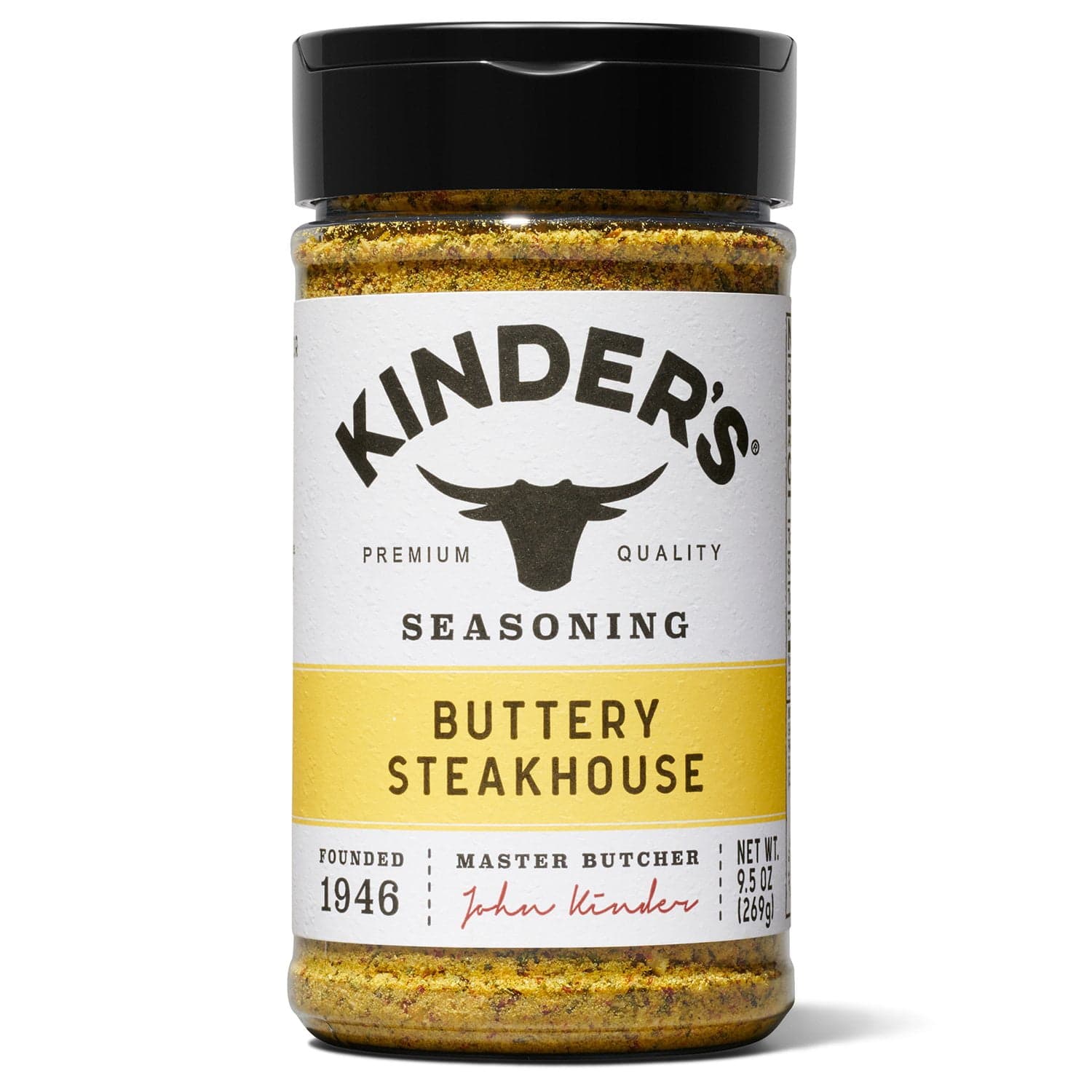
1. Kinder's Buttery Steakhouse Seasoning
This is the one. If you only buy one Kinder's blend for steak, make it Kinder's Buttery Steakhouse Seasoning. It nails the balance between bold and supportive, adding richness without masking the beef.
The flavor profile is exactly what the name promises: buttery, garlicky, with a solid black pepper backbone and a whisper of herbs. The coarse grind creates excellent crust on a hot grill or in cast iron. Salt level is assertive but not aggressive—you can season generously without turning the steak into a salt lick.
On ribeye, it enhanced the fat beautifully. On strip, it added richness the leaner cut needed. Even on sirloin—a cut that can taste flat—it brought depth and made the steak feel more expensive than it was.
The texture deserves mention. Unlike fine-ground blends that dissolve into the meat, Buttery Steakhouse clings to the surface and caramelizes into a savory crust. That textural contrast between crust and tender beef is what separates good steak from great steak.
Best for: Any cut, any cooking method. This is your everyday steak seasoning.
2. Kinder's Dry-Aged Steak Seasoning
If Buttery Steakhouse is the accessible crowd-pleaser, Dry-Aged Steak is the connoisseur's choice. Kinder's Dry-Aged Steak Seasoning uses porcini mushroom powder and other umami-forward ingredients to mimic the funky, nutty depth you get from actual dry-aged beef.
Does it actually taste like dry-aged steak? No. Real dry-aging creates enzymatic breakdown and concentrated flavor that no seasoning can replicate. But it does add a savory, almost meaty richness that makes regular steak taste more complex.
This blend shines on leaner cuts. Strip steak and sirloin both benefited from the extra umami. On ribeye, which already has plenty of richness, it was almost too much—delicious, but bordering on heavy.
The salt level is more restrained here than Buttery Steakhouse, which means you can use a heavy hand without worry. The finish is long and savory, with a slight earthy note from the mushroom.
Best for: New York strip, top sirloin, filet mignon—leaner cuts that need flavor reinforcement.
3. Kinder's Whiskey Peppercorn Seasoning
This blend leans into pepper-forward steakhouse tradition with a bourbon-barrel twist. Kinder's Whiskey Peppercorn Seasoning delivers cracked black pepper heat, a hint of smoke, and subtle sweetness that rounds out the spice.
The whiskey element is gentle—you're not going to taste bourbon, but there's a warm, oaky background note that plays nicely with char from the grill. Pepper is the star here, so if you love au poivre-style steak, this is your speed.
On ribeye grilled over charcoal, this seasoning was outstanding. The smoke from the grill layered with the smoke in the blend, and the pepper cut through the richness of the fat. On strip in a cast-iron pan, it was good but less dynamic—the smoke note felt out of place without actual fire.
One warning: this blend has some heat. It's not hot sauce territory, but if you're sensitive to pepper, go lighter than you think.
Best for: Grilled ribeye, grilled strip. Works best when there's actual smoke involved.
4. Kinder's Prime Rib Rub
Prime Rib Rub is herb-forward and mellow, built around rosemary, thyme, and garlic. It's designed for slow-roasted beef, but it works surprisingly well on grilled steak—especially thicker cuts.
The flavor is more delicate than the previous three. If Buttery Steakhouse is bold and Whiskey Peppercorn is punchy, Prime Rib Rub is refined. It won't overpower a good piece of meat, which can be a virtue if your beef is high-quality.
We tested this on a two-inch ribeye cooked over charcoal with the reverse-sear method (low indirect heat, then high heat sear). The herbs had time to bloom in the low-heat phase, and the final sear caramelized the garlic and onion. The result tasted expensive and restaurant-clean.
On a quick-seared sirloin, though, the seasoning didn't have time to develop. It tasted a bit raw and grassy. This blend needs either time or gentle heat to shine.
Best for: Thick-cut ribeye, reverse-sear method, or oven-roasted beef. Not ideal for fast, high-heat searing.
5. Kinder's Brazilian Steakhouse Seasoning
Brazilian steakhouses use coarse salt as their primary seasoning, and Kinder's Brazilian Steakhouse Seasoning builds on that tradition with garlic, onion, and a touch of heat. It's simple, aggressive, and salt-forward—closer to traditional churrasco than the butter-and-herb blends above.
This seasoning creates a serious crust. The coarse salt draws moisture to the surface, which then caramelizes into a crackling, savory shell. If you love texture, you'll love this.
The trade-off is intensity. This blend is salty. Even with a light hand, it pushes the edge of what most palates consider balanced. If you're cooking a very fatty cut like ribeye or picanha, that salt helps cut through richness. On lean sirloin, it was borderline too much.
We also found that this blend works best when you season right before cooking, not thirty minutes ahead. Pre-salting draws out moisture, which is great for crust but can make leaner cuts a little dry. Season just before it hits the grill.
Best for: Ribeye, picanha, skirt steak—fatty cuts cooked over high heat. Season immediately before cooking.
6. Kinder's The Blend (Salt, Pepper, Garlic)
The Blend is Kinder's minimalist option: salt, pepper, garlic, and not much else. It's what you reach for when you want clean, straightforward seasoning that won't compete with high-quality beef.
There's no butter flavor here, no herbs, no smoke. Just the holy trinity of steak seasoning done well. The garlic is roasted and mellow, not sharp. The pepper has presence without dominating. The salt is well-calibrated.
On a prime ribeye, this was our second-favorite after Buttery Steakhouse. It let the beef be the star. On cheaper sirloin, though, it felt plain—the meat needed more help than The Blend provided.
This is a "know your audience" blend. If you're cooking for someone who thinks seasoning is cheating, or if you're working with dry-aged or wagyu beef, The Blend is a safe, respectful choice. For weeknight grocery-store steaks, you'll want something with more personality.
Best for: High-quality beef where you want the meat to shine. Less ideal for budget cuts.
7. Kinder's Woodfired Garlic Seasoning
Woodfired Garlic is intensely garlicky with a strong smoke component. If you're a garlic fanatic, this will speak to you. If you're not, it might be overwhelming.
On steak, it worked best as an accent rather than the main event. We had good results using Woodfired Garlic on one side of the steak and Buttery Steakhouse on the other, or mixing the two together to dial back the intensity.
The smoke flavor is pronounced—more liquid smoke than wood fire, which won't appeal to purists. On a gas grill where you're not getting real smoke, it can feel artificial. Over charcoal, where there's actual combustion happening, it layered more naturally.
We also tried this on garlic butter basted steak (the TikTok method where you baste with butter, garlic, and thyme in the final minutes). That was a garlic overdose. If you're using Woodfired Garlic, skip the garlic butter.
Best for: Garlic lovers, gas grills where you want smoke flavor without a smoker. Use a lighter hand than other blends.
How to Season Steak Like a Steakhouse
The best seasoning in the world won't fix bad technique. Here's how to get steakhouse results at home.
Timing Matters
Season your steak at least thirty minutes before cooking, or up to twenty-four hours in advance. This gives the salt time to penetrate the meat through osmosis, seasoning the interior rather than just the surface.
If you're short on time, season immediately before cooking. The danger zone is the fifteen-minute mark—salt will have drawn moisture to the surface but not had time to reabsorb, leaving you with a wet steak that won't sear properly.
Use More Than You Think
Most home cooks under-season. A one-inch steak should get about three-quarters of a teaspoon of seasoning per side. That sounds like a lot. It is a lot. It's also correct.
Steak is thick and dense. Surface seasoning only penetrates so far. If you season timidly, you'll get a flavorful crust and bland interior. Season generously and evenly.
Pat the Steak Dry First
Moisture is the enemy of crust. Before you season, pat your steak completely dry with paper towels. If you've salted in advance, pat it dry again before cooking—salt will have drawn moisture to the surface.
A dry steak sears. A wet steak steams.
Bring It to Room Temperature
A cold steak from the fridge will cook unevenly—charred outside, cold center. Let your steak sit at room temperature for thirty to sixty minutes before cooking. This also happens to be the perfect window for seasoning.
Don't Flip Constantly
Let your steak sit undisturbed on the grill or in the pan for at least three to four minutes before flipping. This gives the seasoning time to caramelize into a crust. If you flip every thirty seconds, you'll never build that texture.
Flip once, maybe twice. Not ten times.
Pairing Seasonings with Steak Cuts
Not all steaks are created equal, and not all seasonings work equally well on every cut. Here's how to match blend to beef.
Ribeye
Ribeye is fatty, rich, and forgiving. It can handle bold seasoning without being overwhelmed. Buttery Steakhouse, Whiskey Peppercorn, and Brazilian Steakhouse all shine here. Avoid anything too delicate—the fat will drown it out.
New York Strip
Strip is leaner than ribeye but still has good flavor and marbling. It benefits from seasonings with umami or richness to compensate for less fat. Dry-Aged Steak is perfect here. Buttery Steakhouse also works beautifully.
Filet Mignon / Tenderloin
Filet is tender and mild—arguably bland on its own. It needs help. Dry-Aged Steak brings savoriness. Prime Rib Rub adds herbal elegance. Avoid anything too salty or aggressive; filet's delicate texture can't stand up to it.
Sirloin
Sirloin is the budget cut—less marbling, less tenderness, less inherent flavor. It needs a bold seasoning to compensate. Buttery Steakhouse, Whiskey Peppercorn, and Brazilian Steakhouse all help sirloin punch above its weight class.
Skirt or Flank Steak
These thin, grainy cuts are beefy but can be tough. They're usually marinated, but if you're dry-seasoning, go bold. Brazilian Steakhouse matches the quick, high-heat cooking method these cuts require.
Beyond the Grill: Other Ways to Use Steak Seasoning
Don't limit these blends to steak. Here are other uses we tested:
- Burgers: Buttery Steakhouse and The Blend both make excellent burger seasonings. Mix into the ground beef or season the exterior before grilling.
- Roasted vegetables: Toss Brussels sprouts, broccoli, or cauliflower in oil and any of these seasonings before roasting at 425°F.
- Baked potatoes: Split a baked potato, load it with butter, and hit it with Buttery Steakhouse or Woodfired Garlic.
- Popcorn: Melt butter, toss with popcorn, and dust with The Blend or Dry-Aged Steak for a savory snack.
- Eggs: Scrambled eggs with a pinch of Buttery Steakhouse taste like breakfast at a hotel steakhouse.
What About Mixing Seasonings?
We tried blending two or three Kinder's seasonings to create custom profiles. Results were mixed.
The best combo was Buttery Steakhouse + Dry-Aged Steak in a 2:1 ratio. This gave you the buttery richness of the first with the umami depth of the second. Outstanding on strip steak.
We also liked a 50/50 mix of The Blend + Whiskey Peppercorn for a cleaner pepper-forward profile without the bourbon smoke.
The worst combo was Woodfired Garlic + anything else. The smoke and garlic dominated every blend we paired it with. If you use Woodfired Garlic, let it stand alone.
Storage and Shelf Life
Kinder's seasonings come in large bottles—usually eight to twelve ounces. Stored in a cool, dark pantry with the lid tightly closed, they'll stay potent for twelve to eighteen months.
Avoid keeping them near the stove. Heat and steam degrade the dried herbs and cause clumping. If your seasoning has lost its smell, it's lost its flavor—time to replace it.
We also recommend keeping a small bowl of seasoning at your prep station rather than shaking directly over raw meat. This prevents cross-contamination and keeps your main bottle clean.
Final Verdict: Which Kinder's Seasoning Should You Buy?
If you're only buying one, get Kinder's Buttery Steakhouse Seasoning. It's the most versatile, the most forgiving, and the best all-around steak seasoning in the Kinder's lineup. It works on every cut, every cooking method, and every skill level.
If you cook a lot of steak and want a second bottle, add Kinder's Dry-Aged Steak Seasoning. Between those two, you can handle any beef situation that comes your way.
For the grill obsessives who want the full arsenal, add Kinder's Whiskey Peppercorn Seasoning for pepper-crusted ribeyes over charcoal. That three-bottle setup covers everything from weeknight sirloin to special-occasion prime rib.
Steak doesn't have to be complicated. Good beef, high heat, and the right seasoning will get you ninety percent of the way to steakhouse quality. The last ten percent is practice—and eating a lot of steak along the way.
Ready to upgrade your steak game? Grab a bottle of Buttery Steakhouse, fire up the grill, and taste the difference a great seasoning makes. Your next ribeye is waiting.
Shop the products mentioned in this article
Free shipping on every order. No minimums, no gimmicks.