Best Kinder's Seasoning for Chicken: 7 Blends Tested & Ranked
Looking for the perfect Kinder's seasoning for chicken? We tested every blend on thighs, breasts, and wings to find which ones deliver restaurant-quality flavor every time.
Kinder's makes over twenty seasoning blends, but not all of them shine on chicken. We've grilled, roasted, air-fried, and pan-seared our way through the entire lineup to answer one question: which Kinder's seasoning transforms plain chicken into something you'd actually crave?
This guide ranks the seven best Kinder's seasonings for chicken based on real testing. You'll learn exactly what each blend tastes like, which cooking methods work best, and how to avoid the most common mistakes that lead to bland or over-seasoned chicken.
Why Kinder's Seasonings Work So Well on Chicken
Chicken is the blank canvas of proteins. It picks up flavors fast, but it also exposes weak seasonings just as quickly. Kinder's blends solve three problems that most grocery-store spice mixes can't:
Flavor density. Kinder's packs more garlic, onion, and herb solids into every jar compared to McCormick or generic brands. You see whole pieces, not just powder.
Salt balance. Most home cooks under-season chicken by half. Kinder's blends carry enough salt to properly season a pound of meat with just two teaspoons, so you don't need to guess.
Fat content. Several Kinder's blends include butter powder or oil-soluble flavor compounds that help seasoning cling to chicken skin and stay put during high-heat cooking.
The result? Chicken that tastes like you brined it, marinated it, or spent twenty minutes building a spice rub from scratch—even when you just shook a jar for ten seconds.
Our Testing Method
We seasoned bone-in, skin-on chicken thighs with each blend using the package-recommended ratio (about one teaspoon per pound). We cooked identical batches three ways: grilled over direct heat, roasted at 425°F, and air-fried at 400°F. We tasted every piece blind and ranked them on flavor intensity, versatility, and whether we'd reach for that blend again within the same week.
Boneless, skinless chicken breasts were tested separately because they behave differently—they dry out faster and need more aggressive seasoning to deliver the same punch.
The 7 Best Kinder's Seasonings for Chicken, Ranked
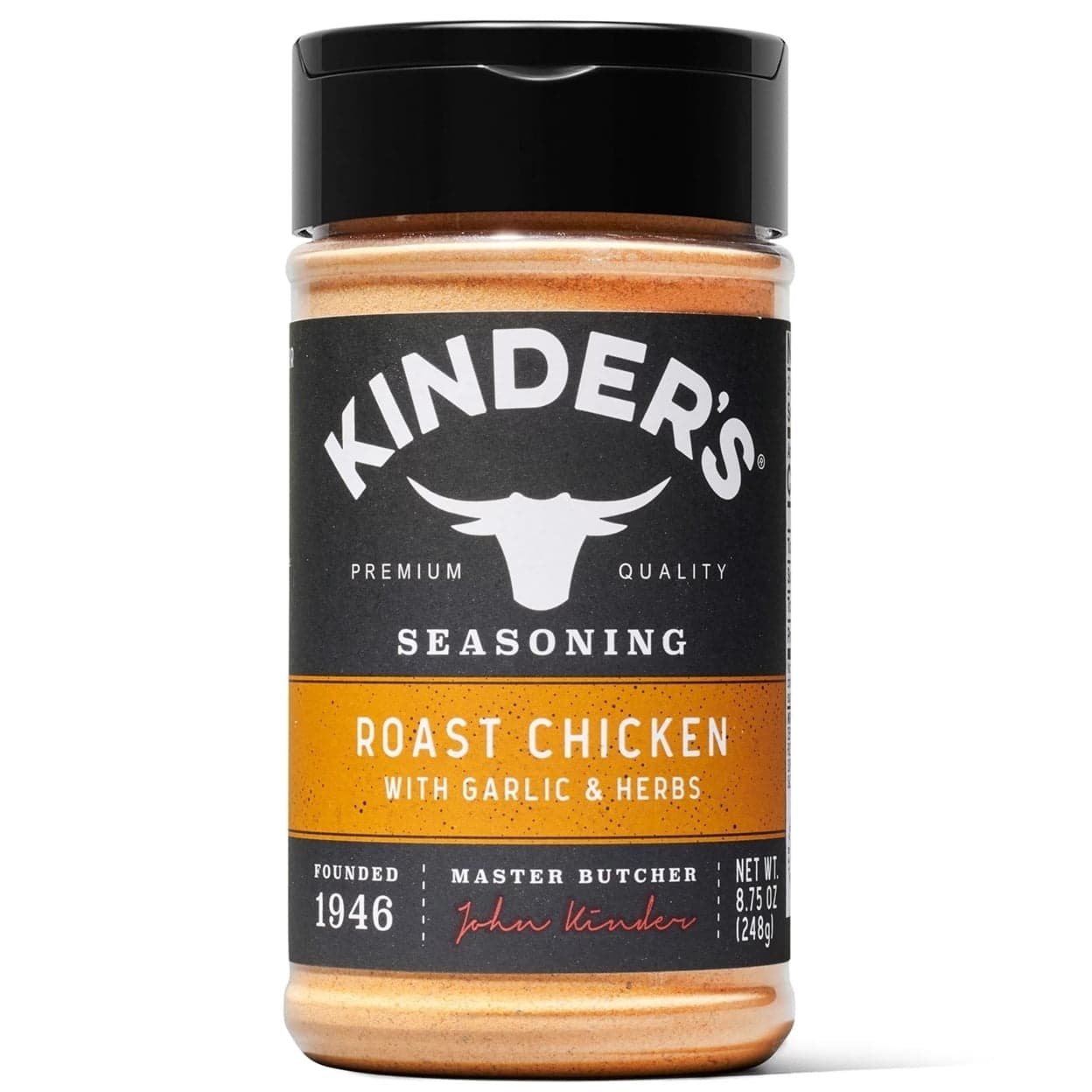
1. Roast Chicken Garlic & Herbs – The All-Purpose Champion
If you only buy one Kinder's seasoning for chicken, make it Roast Chicken Garlic & Herbs. This blend was literally designed for poultry, and it shows. You get a balanced hit of garlic, thyme, rosemary, and black pepper with just enough salt to bring out the natural sweetness of chicken fat.
Best cooking methods: Roasting whole chickens, bone-in thighs, or spatchcocked birds. The herbs bloom in the oven and create a golden, aromatic crust.
Flavor profile: Savory, herbal, subtly garlicky. Think rotisserie chicken from a high-end grocery store, not fast food.
Why it wins: It's mistake-proof. You can use it straight out of the jar with zero additional ingredients and serve the result to guests. It also layers well if you want to add lemon zest, hot sauce, or a finishing drizzle of olive oil.
Avoid this blend if: You want bold, spicy, or regionally specific flavors. This is classic, not adventurous.
2. Garlic Parmesan – The Crispy Wing MVP
Garlic and Parmesan is a winning combo, but most store-bought versions taste like powdered cheese dust. Kinder's nails it. This blend delivers real garlic punch, a hint of umami from the Parmesan, and enough butter flavor to make wings taste like they've been tossed in garlic butter sauce—without the mess.
Best cooking methods: Air fryer wings, oven-roasted drumsticks, or pan-fried chicken cutlets. The cheese and butter solids caramelize beautifully under high, dry heat.
Flavor profile: Rich, garlicky, slightly tangy. It's what you'd get if you melted garlic butter and folded in fresh Parm.
Why it's second: Wings coated in this blend come out restaurant-quality crispy with a sticky, savory glaze. It's also fantastic on chicken thighs destined for pasta or rice bowls.
Avoid this blend if: You're grilling over charcoal. The dairy solids can burn and turn bitter over open flame. Stick to indirect heat or the oven.
3. The Blend (Salt, Pepper, Garlic) – The Minimalist Workhorse
Kinder's The Blend is the seasoning you reach for when you want perfectly seasoned chicken that works with any sauce, side, or cuisine. It's just sea salt, black pepper, and garlic—but the ratios are dialed in so precisely that it outperforms trying to season with those three ingredients separately.
Best cooking methods: Anything. Grilled breasts, sautéed cutlets, roasted thighs, stir-fry strips. This is your everyday workhorse.
Flavor profile: Clean, sharp, garlicky. It enhances chicken without pushing it in any specific flavor direction.
Why it's essential: If you're meal-prepping five pounds of chicken breast for the week, this is the blend that keeps things interesting without limiting your options. Monday's grilled chicken becomes Tuesday's Caesar salad protein and Wednesday's stir-fry base.
Avoid this blend if: You want a one-shake solution that brings its own personality. The Blend supports; it doesn't star.
4. Grilled Chicken Seasoning – The Backyard BBQ Specialist
Kinder's Grilled Chicken Seasoning is tuned for the specific challenges of grilling chicken over direct heat: it includes sugar and spices that caramelize quickly, plus herbs that hold up to char. It's slightly smokier and sweeter than the Roast Chicken blend.
Best cooking methods: Gas or charcoal grill, particularly for skin-on thighs and drumsticks. Also excellent on kebabs.
Flavor profile: Smoky, slightly sweet, peppery. It mimics the flavor of chicken that's been marinated in a zesty herb blend and kissed with smoke.
Why it's fourth: It's more specialized than the top three. If you're grilling chicken, it's perfect. If you're roasting or air-frying, you'd probably reach for Roast Chicken or The Blend first.
Avoid this blend if: You're cooking indoors and want clean, neutral seasoning. The smoke notes can feel out of place in a weeknight stovetop sauté.
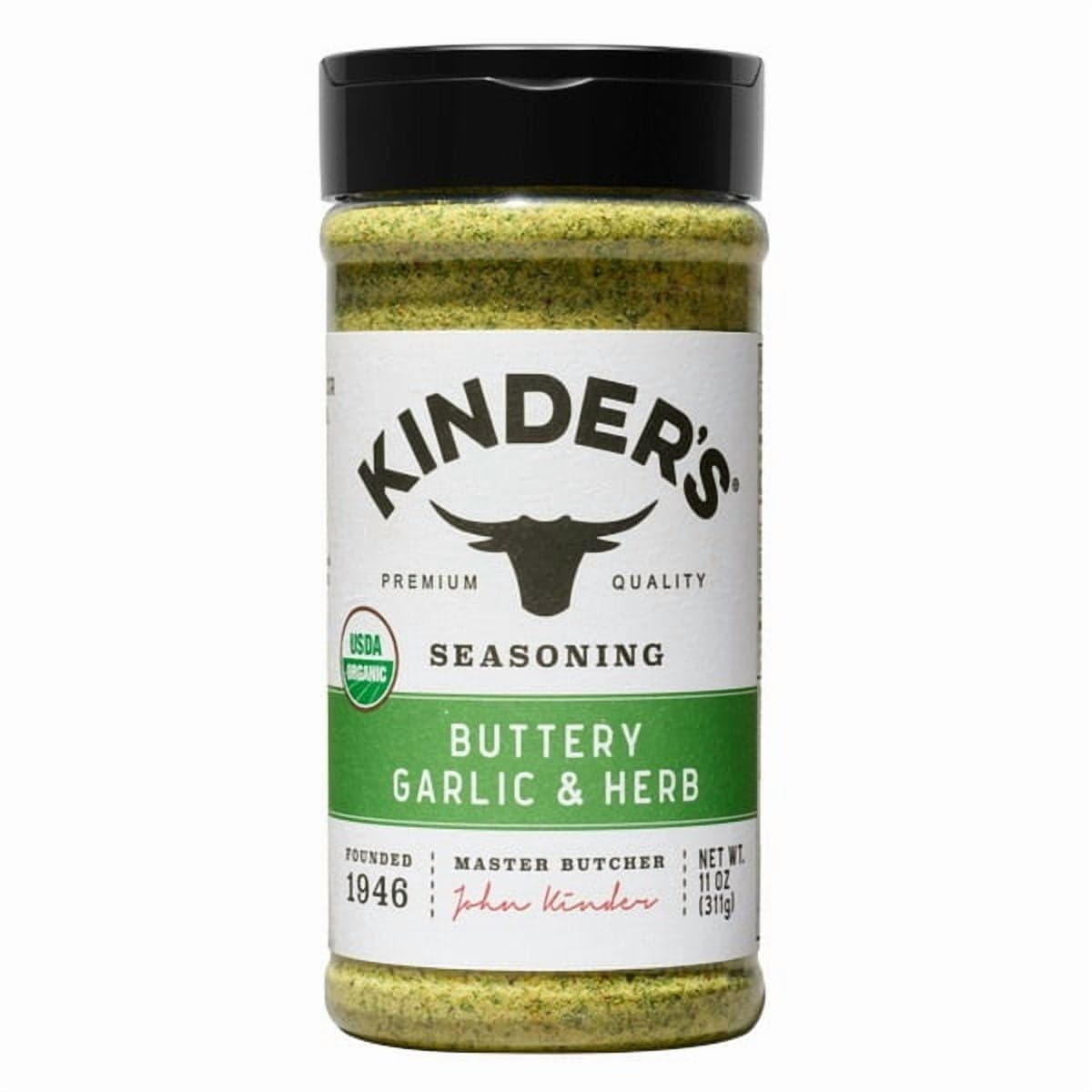
5. Buttery Garlic and Herb (Organic) – The Weeknight Luxury Option
This is Kinder's organic answer to European-style roast chicken. It's heavier on the butter powder and parsley than the standard Roast Chicken blend, which makes it taste richer and slightly more indulgent. If you're cooking for someone who loves garlic bread, they'll love this on chicken.
Best cooking methods: Oven roasting, slow-cooker whole chickens, or baked bone-in breasts. The butter flavor really shines when chicken renders its own fat.
Flavor profile: Buttery, herbaceous, garlicky. Think bistro chicken with pan sauce, minus the pan sauce.
Why it's fifth: It's delicious, but it overlaps a lot with Roast Chicken and Garlic Parmesan. If you already own one of those, this becomes a nice-to-have rather than essential.
Avoid this blend if: You're grilling skin-on chicken. Like Garlic Parmesan, the butter solids can scorch over direct flame.
6. Lemon Butter Dill – The Spring and Summer Wildcard
Lemon Butter Dill is the most polarizing blend on this list, but if you love bright, herbaceous chicken, it's a top-three pick. The dill is assertive, the lemon flavor is tangy and natural (not candy-like), and the butter base keeps it from tasting like a salad dressing.
Best cooking methods: Pan-seared chicken breasts, baked salmon (yes, it's great on fish too), or roasted bone-in thighs served with rice or potatoes.
Flavor profile: Bright, tangy, herbal. It's Mediterranean without being specifically Greek or Italian.
Why it's sixth: It's seasonal. We crave this blend in warm weather, but it feels out of place in fall and winter. It's also a little one-note—you can't really dress it up or layer other sauces on top.
Avoid this blend if: You don't like dill or you're cooking for picky eaters. This is a love-it-or-skip-it flavor.
7. Korean BBQ Seasoning – The Sweet-Spicy Game Changer
Kinder's Korean BBQ Seasoning is the only sweet-and-savory option on this list, and it opens up a completely different style of chicken. You get gochugaru chile flakes, sesame, garlic, and a touch of sweetness that caramelizes beautifully on the grill or in a screaming-hot cast iron pan.
Best cooking methods: Grilled thighs, stir-fried chicken strips, or air-fryer wings. The sugar content means you need high heat and short cooking times to avoid burning.
Flavor profile: Sweet, garlicky, mildly spicy, with toasted sesame undertones. It's similar to gochujang-marinated chicken but way faster.
Why it's seventh: It's fantastic, but it's a niche flavor. You'll use the top five blends multiple times per week. Korean BBQ is a once-a-week craving at most.
Avoid this blend if: You're slow-cooking or roasting at moderate temps. The sugars will burn before the chicken cooks through.
How to Season Chicken with Kinder's: The Master Formula
Most people under-season chicken and then blame the spice blend. Here's the formula that works every time:
- Boneless, skinless breasts or thighs: 1 teaspoon seasoning per 6–8 ounces of meat. Pat the chicken dry first, then coat all sides evenly. Let it sit for 10 minutes before cooking.
- Bone-in, skin-on pieces: 1 teaspoon per piece (thigh or drumstick) or 1 tablespoon per pound. Rub it under and over the skin. Let it rest in the fridge for 30 minutes to let the salt penetrate.
- Whole chicken: 1 tablespoon per 4 pounds of bird. Rub it all over the outside and inside the cavity. Refrigerate uncovered for at least 2 hours, or overnight for crispier skin.
- Wings: 1 tablespoon per pound of wings. Toss in a bowl, not a bag—you want even coverage on every flat and drum.
If your chicken is coming out bland, you're not using enough seasoning. Kinder's blends are concentrated, but chicken is dense and needs more salt than you think to taste properly seasoned all the way through.
The Best Cooking Method for Each Kinder's Blend
Every Kinder's seasoning performs differently depending on how you cook the chicken. Here's a quick-reference guide:
Oven Roasting (400–425°F)
Best blends: Roast Chicken Garlic & Herbs, Buttery Garlic and Herb, Lemon Butter Dill.
Why: Moderate heat allows herbs and butter solids to bloom without burning. Skin crisps perfectly, and the seasoning forms a light crust.
Grilling (Direct Heat, Medium-High)
Best blends: Grilled Chicken Seasoning, The Blend, Korean BBQ Seasoning.
Why: These blends either resist burning (The Blend) or are designed to caramelize quickly (Grilled Chicken, Korean BBQ). Avoid dairy-heavy blends like Garlic Parmesan on direct flame.
Air Frying (375–400°F)
Best blends: Garlic Parmesan, Roast Chicken Garlic & Herbs, Korean BBQ Seasoning.
Why: The circulating hot air crisps skin and caramelizes seasoning without burning. Wings in particular come out incredible with these three.
Pan-Searing or Stir-Frying (High Heat, Short Time)
Best blends: The Blend, Lemon Butter Dill, Korean BBQ Seasoning.
Why: Clean flavors work best when you're adding sauces or building a dish. The Blend is neutral, Lemon Butter Dill is bright, and Korean BBQ brings the funk.
Slow Cooker or Instant Pot
Best blends: Roast Chicken Garlic & Herbs, Grilled Chicken Seasoning.
Why: Long, moist cooking mutes spice intensity, so you want blends with strong garlic and herb backbones that won't disappear.
Common Mistakes (And How to Fix Them)
Mistake #1: Seasoning Wet Chicken
If the surface of your chicken is damp, the seasoning will clump and slide off during cooking. Always pat chicken completely dry with paper towels before you season. This also helps skin crisp up.
Mistake #2: Not Letting It Rest
Kinder's seasonings contain salt, and salt needs time to dissolve and penetrate the meat. Season chicken at least 10 minutes before cooking—30 minutes to 2 hours is even better. The texture improves and the flavor goes deeper.
Mistake #3: Using Too Little on Skin-On Pieces
Skin is a barrier. If you season just the skin, the meat underneath will taste bland. Either rub seasoning under the skin or use a more generous hand than you would on skinless cuts.
Mistake #4: Expecting One Blend to Do Everything
Kinder's blends are specialized. Garlic Parmesan is perfect for wings but weird on grilled breasts. Korean BBQ is amazing in stir-fries but out of place on a roast chicken. Match the blend to the dish, not the other way around.
Three Quick Recipes to Showcase Each Blend
Weeknight Roast Chicken Thighs (Roast Chicken Garlic & Herbs)
Pat 6 bone-in, skin-on thighs dry. Season generously with Roast Chicken Garlic & Herbs, rubbing some under the skin. Let rest 30 minutes. Roast at 425°F for 35–40 minutes until skin is golden and internal temp hits 175°F. Serve with roasted vegetables or over rice.
Crispy Garlic Parmesan Wings (Garlic Parmesan)
Toss 2 pounds of chicken wings with 2 tablespoons Garlic Parmesan seasoning. Arrange in a single layer in your air fryer basket. Cook at 400°F for 22–25 minutes, shaking halfway through. Serve with ranch or blue cheese and celery.
Korean-Style Chicken Stir-Fry (Korean BBQ Seasoning)
Slice 1 pound of chicken thighs into strips. Toss with 1 tablespoon Korean BBQ seasoning. Heat a wok or cast iron skillet over high heat with 1 tablespoon oil. Stir-fry chicken for 5–6 minutes until caramelized and cooked through. Serve over rice with steamed broccoli and a drizzle of sesame oil.
Which Blend Should You Buy First?
If you're new to Kinder's or only buying one bottle, start with Roast Chicken Garlic & Herbs. It's the most versatile, works on any cut of chicken, and pairs with almost any side dish or cuisine. You'll use the whole jar within a month.
If you cook wings regularly, add Garlic Parmesan next. If you meal-prep a lot of plain chicken for bowls and salads, grab The Blend. If you grill often, pick up Grilled Chicken Seasoning.
Once you have two or three of the core blends, branch out into the seasonal or specialty options like Lemon Butter Dill and Korean BBQ. You'll find yourself reaching for different blends depending on the weather, the occasion, and what you're craving that week.
Final Thoughts: The Best Kinder's Seasoning for Chicken Depends on How You Cook
There's no single "best" Kinder's seasoning for chicken because chicken isn't one thing. Boneless breasts need different treatment than wings. Grilled thighs taste nothing like roasted whole birds. The seven blends we ranked above cover every scenario, from weeknight speed to weekend showstoppers.
Start with the all-purpose classics—Roast Chicken Garlic & Herbs and The Blend—and build your collection from there. Once you dial in the seasoning-to-chicken ratio and match the right blend to the right cooking method, you'll stop ordering rotisserie chicken from the grocery store and start making better versions at home in less time.
Ready to upgrade your chicken game? Grab a bottle of Kinder's Roast Chicken Garlic & Herbs or The Blend and taste the difference tonight. Your weeknight dinners just got a serious upgrade.
Shop the products mentioned in this article
Free shipping on every order. No minimums, no gimmicks.