Best Kinder's Seasonings for Beef & Pork: A Beginner's Guide
New to Kinder's seasonings? These five beginner-friendly blends transform beef and pork into restaurant-quality meals without the guesswork.
Cooking beef and pork at home can feel intimidating when you're staring at a dozen different seasoning bottles and wondering which one actually works. Kinder's has built a cult following for good reason: their seasonings deliver consistent, bold flavor without requiring a culinary degree. If you're just starting to explore Kinder's lineup, this guide will walk you through the best blends for beef and pork—and exactly how to use them.
The secret to great home-cooked meat isn't fancy technique. It's using seasonings that already have the heavy lifting done for you. Kinder's blends combine salt, pepper, garlic, herbs, and umami-rich ingredients in ratios that actually work. No more bland pork chops or underseasoned steaks. Let's break down which bottles belong in your kitchen.
Why Kinder's Seasonings Work for Beginners
Before we dive into specific blends, it helps to understand why Kinder's has become the go-to brand for people who want great flavor without complexity.
First, Kinder's seasonings are pre-balanced. You don't need to measure out garlic powder, onion powder, paprika, and salt separately. Everything is already blended in proportions that complement each other. This eliminates the most common beginner mistake: under-seasoning or creating a flavor profile that's too one-dimensional.
Second, the blends are forgiving. Unlike fine-dining spice rubs that require precise application, Kinder's seasonings taste good whether you use a light dusting or a heavy coat. That margin of error is critical when you're still learning how much seasoning a pound of pork shoulder or a ribeye actually needs.
Third, they're versatile. Most Kinder's blends work across multiple cooking methods—grilling, pan-searing, oven-roasting, smoking, even air-frying. You're not locked into one technique, which gives you room to experiment and build confidence.
The 5 Best Kinder's Seasonings for Beef and Pork
If you're building your first Kinder's collection, these five bottles will cover 90% of your beef and pork cooking. Each one brings something different to the table, and together they give you serious range.
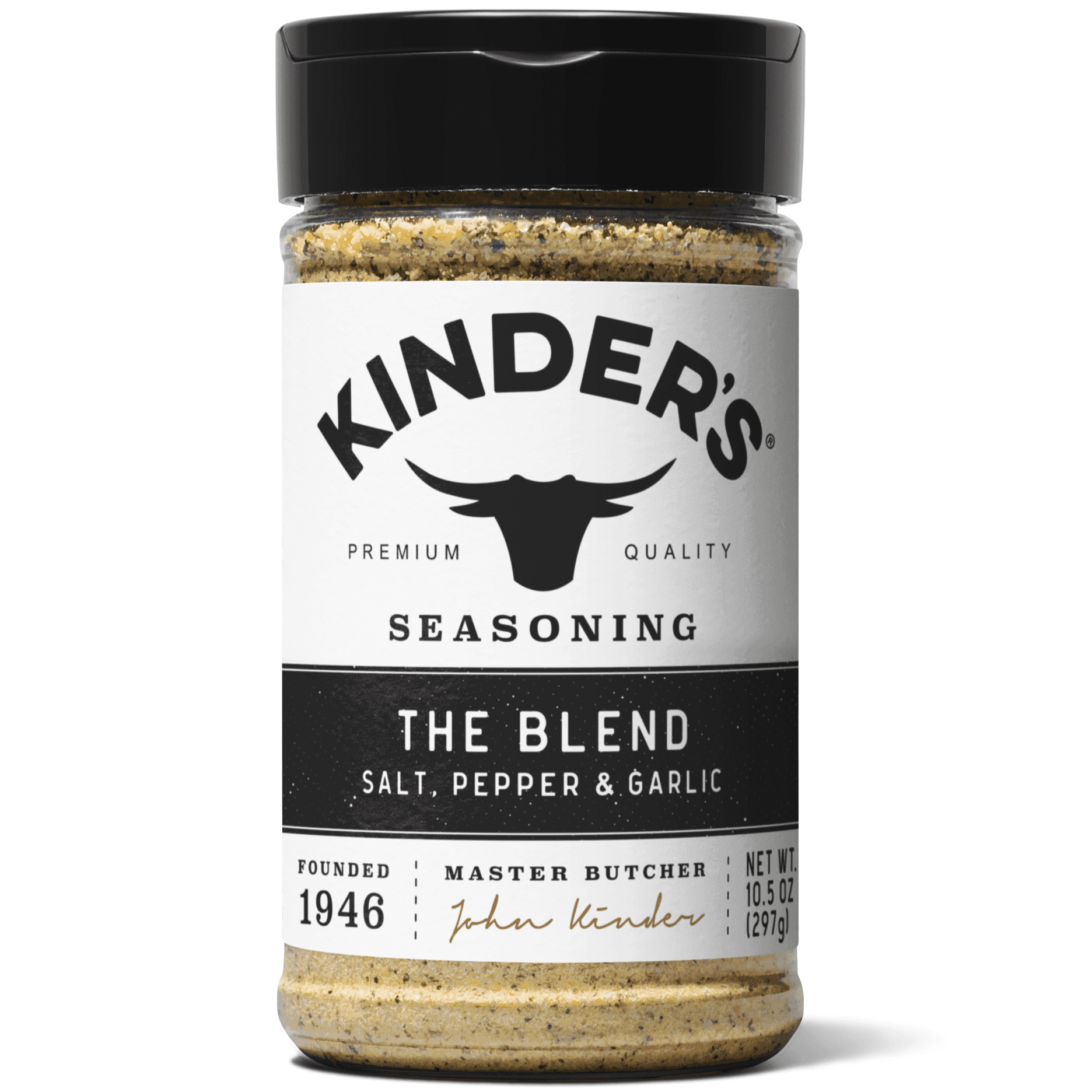
1. The Blend (Salt, Pepper, Garlic)
This is the single best starting point for any beginner. Kinder's The Blend is exactly what the name suggests: a straightforward mix of coarse salt, cracked black pepper, and garlic. It's the foundation seasoning that works on literally any cut of beef or pork.
Why it's great for beginners: It's impossible to mess up. If you've ever seasoned meat with just salt and pepper, this is that—but better, because the garlic adds depth and the ratio is already dialed in. You can use it as your only seasoning or layer it under something bolder.
Best uses:
- Ribeye, New York strip, or sirloin steaks
- Pork chops (bone-in or boneless)
- Burgers (beef or pork)
- Tri-tip or pork tenderloin
- Any cut you want to taste like itself, with clean seasoning
Application tip: Pat your meat dry, coat both sides generously (more than you think), and let it sit at room temperature for 20–30 minutes before cooking. The salt will start to penetrate the surface, which gives you better seasoning throughout and a superior crust.
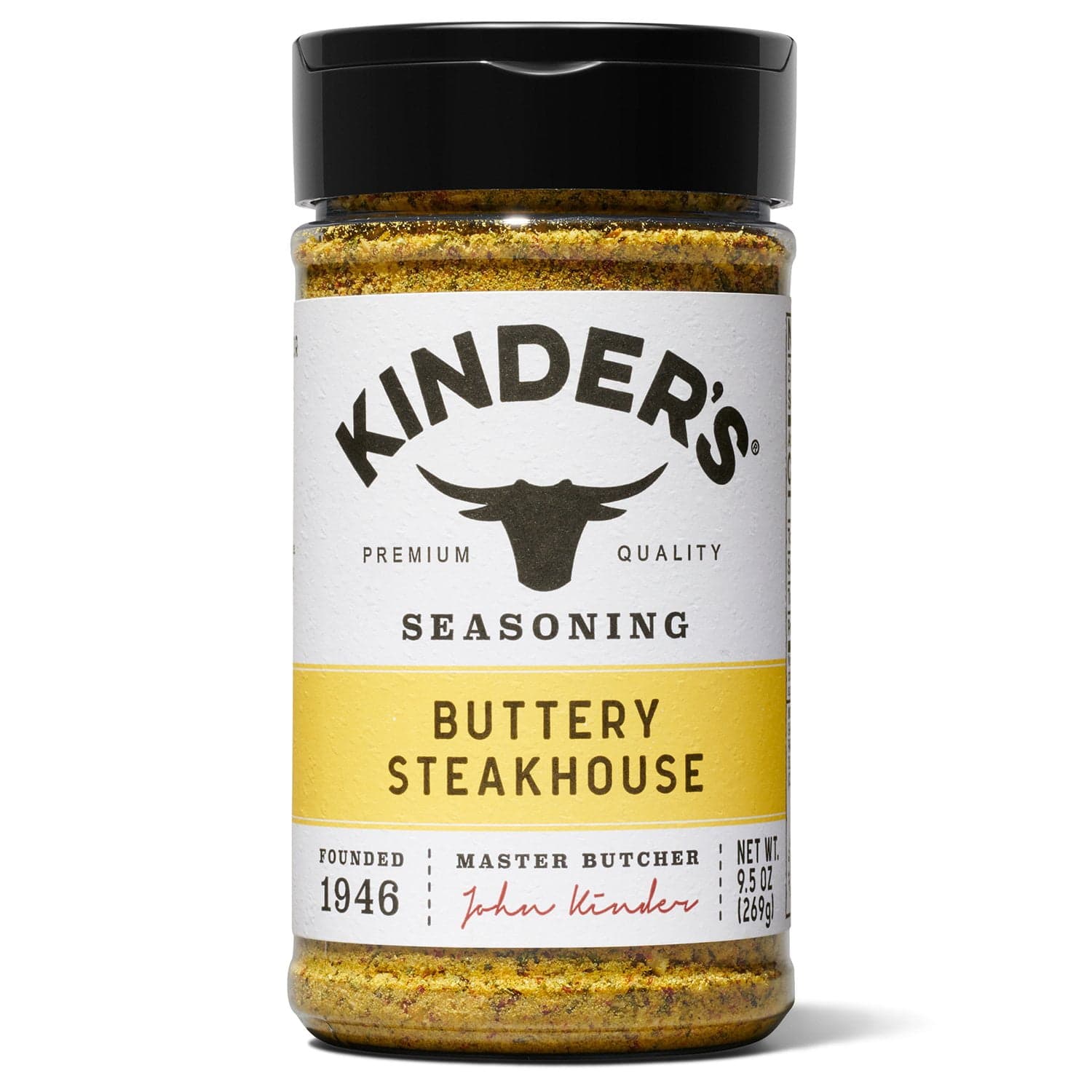
2. Buttery Steakhouse Seasoning
If The Blend is your everyday workhorse, Kinder's Buttery Steakhouse Seasoning is your weekend showstopper. This blend adds butter flavor, herbs, and a touch of sweetness to the classic salt-pepper-garlic base. It's designed to mimic the flavor of a high-end steakhouse without the $60 price tag.
Why it's great for beginners: It makes cheap cuts taste expensive. A grocery-store sirloin or pork loin suddenly tastes like something you'd order at a white-tablecloth restaurant. The butter notes add richness without being greasy, and the seasoning does all the work—you just cook the meat.
Best uses:
- Any steak (especially leaner cuts like sirloin or flat iron)
- Pork loin roast or pork chops
- Beef roast (chuck, rump, or ribeye roast)
- Grilled or reverse-seared thick steaks
Application tip: Use this on medium-thick to thick cuts where you want a flavor boost. It works best with high-heat cooking—grilling, cast iron searing, or broiling—because the sugars in the blend caramelize beautifully and form a crust.
3. Whiskey Peppercorn Seasoning
This is where Kinder's starts to get interesting. Kinder's Whiskey Peppercorn Seasoning combines cracked black pepper with whiskey-barrel flavors, brown sugar, and savory spices. It's bold, slightly sweet, and has a smoky depth that pairs perfectly with red meat and pork.
Why it's great for beginners: It introduces you to more complex flavor-building without requiring any actual effort. The whiskey and brown sugar create a glaze-like effect when the meat cooks, which looks and tastes impressive but happens automatically.
Best uses:
- Ribeye, porterhouse, or T-bone steaks
- Pork ribs (baby back or spare ribs)
- Pork shoulder or pork butt (for smoking or slow-roasting)
- Beef brisket (as part of a rub blend)
- Grilled or smoked pork chops
Application tip: This seasoning shines when you're grilling or smoking. The sugars can burn over very high heat, so if you're searing a steak in a cast iron pan, use a medium-high heat rather than screaming hot. For low-and-slow cooking, coat generously and let the seasoning meld into the bark.
4. Brazilian Steakhouse Seasoning
Brazilian churrasco-style cooking is all about simple, high-quality seasoning that lets the meat shine. Kinder's Brazilian Steakhouse Seasoning captures that philosophy with coarse salt, garlic, and a hint of citrus and spice. It's punchy, savory, and ideal for cuts you want to cook hot and fast.
Why it's great for beginners: It teaches you how powerful simplicity can be. You don't need a dozen ingredients to make meat taste incredible—just the right salt, the right garlic, and the confidence to season generously.
Best uses:
- Picanha (top sirloin cap) or tri-tip
- Skirt steak or flank steak
- Pork belly or pork shoulder steaks
- Beef short ribs
- Grilled sausages (beef or pork)
Application tip: Brazilian steakhouse cooking typically uses coarse salt applied heavily right before grilling. With this blend, season your meat 10–15 minutes before cooking (not hours in advance), then grill over high heat. Slice thin against the grain and serve immediately.
5. Carne Asada Rub
If you're cooking for tacos, burritos, or anything where you want bold, Latin-inspired flavor, Kinder's Carne Asada Rub is your answer. It combines garlic, citrus, chili, cumin, and a hint of smokiness—everything you need for authentic-tasting carne asada without marinating overnight.
Why it's great for beginners: It's a complete flavor system in one bottle. Traditionally, carne asada requires a marinade with lime juice, garlic, cilantro, and spices. This rub gives you 90% of that flavor in a dry form, which means less prep and no mess.
Best uses:
- Skirt steak, flank steak, or sirloin (for tacos)
- Pork shoulder or pork steaks (for carnitas-style dishes)
- Beef or pork fajita strips
- Grilled thin-sliced meats for rice bowls
Application tip: Season your meat and let it sit for 30 minutes to an hour before cooking. The citrus and chili flavors need a little time to penetrate. Grill over high heat until slightly charred, then slice thin and serve with lime wedges, onions, and cilantro.
How to Choose the Right Kinder's Seasoning for Your Cooking Style
With five solid options, the question becomes: which one do you reach for first? Here's a quick decision framework based on what you're cooking and how you like to cook it.
If you mostly grill steaks and want clean, simple flavor: Start with The Blend. It's the most versatile and teaches you proper seasoning technique without distractions.
If you want restaurant-quality flavor with minimal effort: Go with Buttery Steakhouse. It's the biggest flavor upgrade for the least amount of work.
If you like bold, slightly sweet, smoky profiles: Pick up Whiskey Peppercorn. It's especially good if you're getting into smoking or low-and-slow cooking.
If you cook a lot of lean cuts or want something versatile across beef and pork: Brazilian Steakhouse gives you a punchy, savory base that works on almost anything.
If you love Mexican food or cook a lot of tacos and fajitas: Carne Asada Rub is a must-have. It's the fastest path to authentic flavor.
Common Beginner Mistakes (and How to Avoid Them)
Even with great seasonings, there are a few pitfalls that can hold you back. Here's what to watch for.
Not Using Enough Seasoning
The number one mistake beginners make is under-seasoning. Meat is dense, and it needs more seasoning than you think to taste properly flavored all the way through. A good rule of thumb: if it looks like too much seasoning in the bottle, it's probably right once it's cooked.
For a pound of meat (whether steak, pork chops, or roast), you're typically looking at 1 to 2 tablespoons of seasoning total (both sides). Don't be shy.
Seasoning Right Before Cooking
Ideally, season your meat and let it rest for at least 20–30 minutes at room temperature (or up to overnight in the fridge for larger cuts). This gives the salt time to penetrate the surface, which improves texture and flavor. If you're in a rush, even 10 minutes is better than nothing.
Not Patting the Meat Dry
Moisture on the surface of your meat prevents proper browning and crust formation. Before you season, pat your beef or pork dry with paper towels. This simple step makes a huge difference in how well the seasoning adheres and how good the final sear looks.
Using the Wrong Heat Level
Some Kinder's seasonings (especially those with sugar, like Whiskey Peppercorn or Buttery Steakhouse) can burn if your heat is too high. For direct grilling, aim for medium-high rather than maximum heat. For pan-searing, preheat your pan but don't let it smoke excessively before adding the meat.
Simple Recipes to Get Started
Here are three dead-simple recipes that showcase how easy Kinder's seasonings make beef and pork cooking.
Perfect Grilled Ribeye with The Blend
- Remove a 1-inch ribeye from the fridge and pat it dry.
- Season both sides generously with The Blend (about 1.5 teaspoons per side).
- Let the steak rest at room temperature for 30 minutes.
- Preheat your grill to medium-high (around 450°F).
- Grill for 4–5 minutes per side for medium-rare, flipping once.
- Rest for 5 minutes, then slice and serve.
Weeknight Pork Chops with Buttery Steakhouse
- Pat four bone-in pork chops dry.
- Season both sides with Buttery Steakhouse (about 1 teaspoon per chop).
- Heat a cast iron skillet over medium-high heat with a tablespoon of oil.
- Sear the pork chops for 3–4 minutes per side until golden and internal temp hits 145°F.
- Rest for 3 minutes and serve with roasted vegetables or a simple salad.
Easy Carne Asada Tacos
- Season 1.5 pounds of skirt steak with Carne Asada Rub (about 2 tablespoons total).
- Let it sit for 30–60 minutes at room temperature.
- Grill over high heat for 3–4 minutes per side until charred and medium-rare.
- Let rest for 5 minutes, then slice thin against the grain.
- Serve in warm tortillas with diced onion, cilantro, lime wedges, and your favorite salsa.
Building Your Kinder's Collection Over Time
You don't need to buy every bottle at once. Start with one or two seasonings that match how you currently cook, then expand as you get comfortable.
A solid beginner's three-bottle setup would be:
- The Blend for everyday steaks, chops, and burgers
- Buttery Steakhouse for when you want to impress
- Carne Asada Rub for tacos, fajitas, and Latin-inspired meals
From there, add Whiskey Peppercorn if you start smoking or grilling ribs, and Brazilian Steakhouse if you want a bold, simple option for leaner cuts.
Where Kinder's Seasonings Fit in Your Cooking Journey
One of the best things about Kinder's is that the seasonings grow with you. When you're a beginner, they eliminate guesswork and deliver consistent results. As you gain confidence, you can start layering them, using them as a base and adding fresh herbs or finishing salts on top.
You'll also start to notice how different seasonings interact with different cooking methods. The Blend is fantastic on a hot grill but also works beautifully on a reverse-seared steak in the oven. Whiskey Peppercorn might burn slightly on a screaming-hot cast iron, but it creates an incredible bark on a smoked pork shoulder.
The more you cook, the more intuitive these decisions become. But even experienced grill masters keep a few bottles of Kinder's on hand because sometimes you just want great flavor without overthinking it.
Final Thoughts: Start Simple, Season Generously
Cooking great beef and pork at home doesn't require a culinary school education or a cabinet full of exotic spices. It requires good-quality meat, the right seasoning, and the confidence to use enough of it.
Kinder's seasonings remove the complexity and let you focus on the cooking itself—learning how your grill behaves, how to judge doneness, how to build a proper crust. Those skills are what turn you into a confident cook, and having reliable, well-balanced seasonings makes the learning process a lot more enjoyable (and delicious).
If you're ready to level up your beef and pork game, grab a bottle or two from the list above and get cooking. You'll be shocked at how much better your meals taste with almost zero extra effort.
Ready to stock your spice cabinet? Browse our full collection of Kinder's seasonings and find your next favorite blend. Whether you're grilling your first steak or perfecting your weekend pork chops, we've got the flavors that make cooking at home actually worth it.
Shop the products mentioned in this article
Free shipping on every order. No minimums, no gimmicks.