How to Grill Perfect Pork Chops Every Time (Simple Tips)
Grilled pork chops are one of grilling's most underrated pleasures. Learn how to nail juicy, flavorful chops every time with the right cut, temperature, and seasonings.
Grilled pork chops don't get the respect they deserve. While everyone obsesses over brisket, ribs, and ribeyes, a perfectly grilled pork chop—simple, juicy, with a caramelized crust—delivers satisfaction that's hard to beat. The Reddit grilling community knows this, and they're right: there's not much better than simple grilled pork chops when you nail the technique.
The beauty of pork chops lies in their accessibility. They're affordable, cook quickly, and absorb seasoning beautifully. But they're also unforgiving. Overcook them by even a few minutes, and you're chewing through dry, tough meat. Choose the wrong cut, and no amount of seasoning will save dinner.
This guide walks you through everything you need to grill pork chops that rival any steakhouse: choosing the right cut, seasoning strategies, temperature control, and timing. Whether you're a weeknight griller or a weekend pit master, you'll walk away with a foolproof method for juicy, flavorful pork chops every single time.
Why Pork Chops Are the Unsung Hero of the Grill
Pork chops offer something rare in the grilling world: speed without sacrifice. A one-inch bone-in chop takes 8-10 minutes total. That's faster than most chicken breasts and a fraction of the time required for a good steak. You can go from fridge to table in under 20 minutes, including rest time.
They're also incredibly versatile. Pork's mild flavor profile works with nearly every seasoning style—from classic garlic and herb to sweet-and-spicy glazes, Latin rubs, and Asian-inspired marinades. This makes them perfect for weeknight rotation when you want variety without buying a new protein every time.
Cost matters too. Quality pork chops run $4-7 per pound depending on cut and sourcing, significantly less than comparable beef cuts. You can feed a family of four for under $15, which is rare for a protein that feels this special.
The challenge is that pork has changed. Modern pork is bred to be leaner than the pork of 30 years ago—great for health, tough on forgiveness. Lower fat content means less margin for error. But with the right approach, you'll consistently deliver chops that are tender, juicy, and anything but boring.
Choosing the Right Cut: Not All Pork Chops Are Created Equal
Your success starts at the butcher counter. Pork chops come in several cuts, and each behaves differently on the grill.
Bone-In Rib Chops (The Gold Standard)
Rib chops are cut from the rib section and contain a single curved bone. They're the pork equivalent of a ribeye: well-marbled, tender, and forgiving. The bone helps insulate the meat during cooking, reducing the risk of drying out. The fat cap along one edge bastes the chop as it renders, adding flavor and moisture.
Look for chops that are at least one inch thick, preferably closer to 1.5 inches. Thin chops overcook before you get a good sear. Thick chops give you time to develop color and flavor while keeping the interior juicy.
Bone-In Loin Chops (The Porterhouse)
Loin chops are cut from further back and include a T-shaped bone with meat on both sides—a strip of loin on one side and a smaller piece of tenderloin on the other. These are leaner than rib chops, which means they're slightly less forgiving but still excellent when monitored closely.
The two-muscle structure means uneven cooking is a risk. The tenderloin side cooks faster than the loin. Position the tenderloin away from the hottest part of your grill to even things out.
Boneless Chops (Convenient but Tricky)
Boneless chops cook faster and are easier to eat, but they lack the flavor and moisture insurance that bones provide. They're more prone to drying out and curling on the grill. If you go boneless, brine them first (more on that below) and watch your temperature like a hawk.
Center-Cut vs. Shoulder Chops
Center-cut chops (rib and loin) are what you want for grilling. Shoulder chops, sometimes called blade chops, are tougher and benefit more from braising than grilling. They're cheaper, but this isn't where you save money.
The Case for Brining (And When to Skip It)
Brining is a simple insurance policy against dry pork. A basic brine—water, salt, and optionally sugar—seasons the meat throughout and helps it retain moisture during cooking. Pork absorbs brine quickly; even 30 minutes makes a difference, though 2-4 hours is ideal.
Here's a basic ratio: 1/4 cup kosher salt and 1/4 cup sugar per quart of water. Submerge your chops, refrigerate, then rinse and pat completely dry before seasoning and grilling.
When to skip it: If your chops are thick (1.5 inches or more), well-marbled, and you're confident in your temperature control, brining is optional. Bone-in rib chops are naturally more forgiving. Save brining for boneless chops, thinner cuts, or when you're grilling for a crowd and can't babysit every piece of meat.
Seasoning Strategies: From Classic to Bold
Pork chops respond beautifully to seasoning. Because the meat itself is mild, the rub or marinade you choose will define the dish.
Classic Salt, Pepper, and Garlic
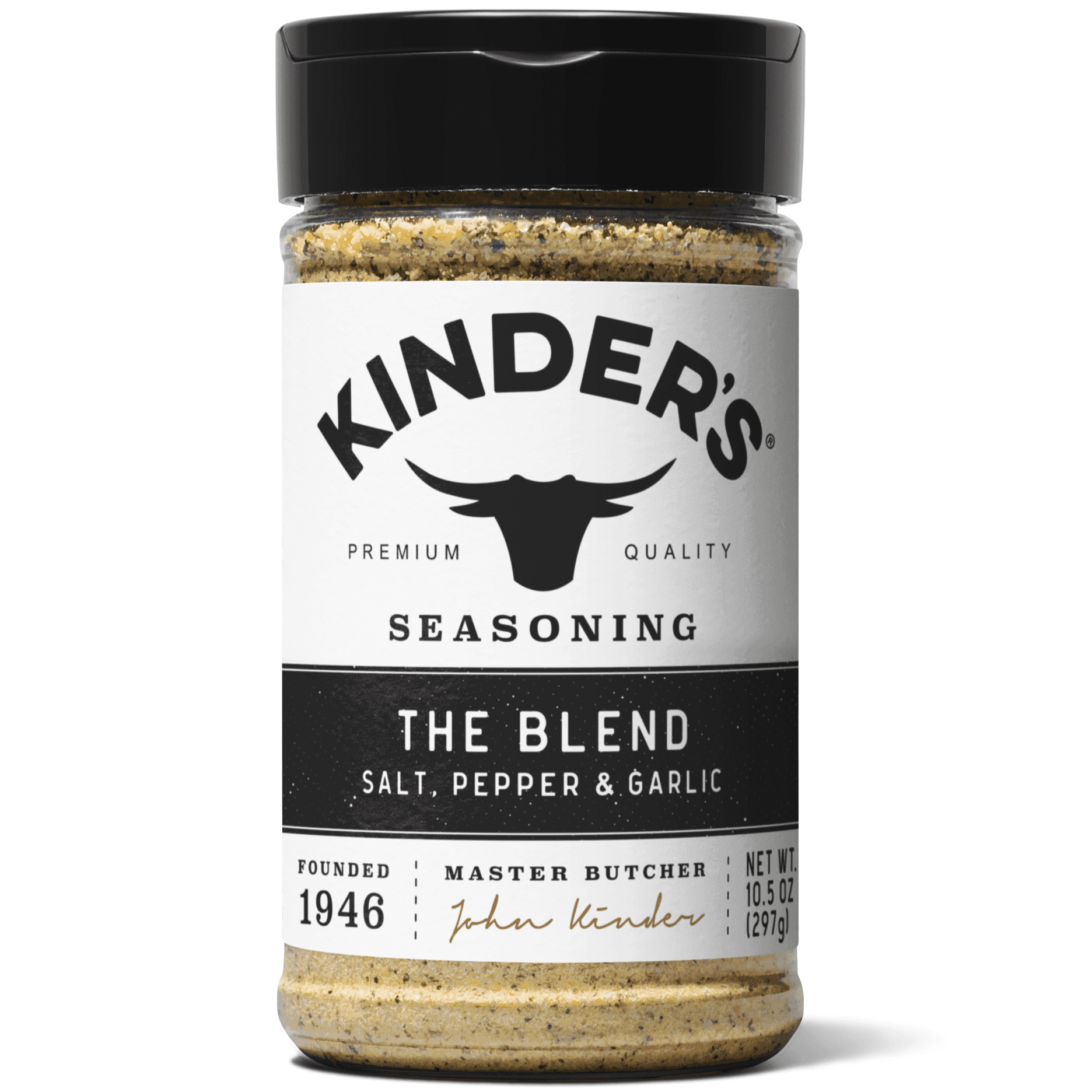
Sometimes simple is best. A generous coating of kosher salt, coarse black pepper, and granulated garlic lets the pork flavor shine while adding a savory crust. This is the baseline every griller should master before getting fancy. A blend like Kinder's The Blend, which combines salt, pepper, and garlic in perfect balance, is purpose-built for this approach and works flawlessly on pork.
Buttery, Herbaceous, and Rich
Pork pairs beautifully with butter, garlic, and herbs—think rosemary, thyme, and parsley. For this profile, try Kinder's Buttery Garlic and Herb Seasoning. It's USDA Organic, loaded with real garlic and herb flavor, and adds a steakhouse-quality richness without any work. Apply it generously before grilling, and consider basting with melted butter during the last minute on the grill for extra decadence.
Sweet and Smoky
Brown sugar, smoked paprika, and a hint of heat create a caramelized crust that's hard to resist. Kinder's Hickory Brown Sugar Seasoning delivers this profile in one bottle—smoky, slightly sweet, and perfect for pork. The sugar in the rub caramelizes beautifully over direct heat, creating a lacquered crust that looks as good as it tastes.
Bold and Peppery
If you want steakhouse swagger, try a bold, peppery rub with whiskey notes. Kinder's Whiskey Peppercorn Seasoning brings serious depth—cracked black pepper, garlic, onion, and a hint of whiskey barrel smoke. It's aggressive in the best way and pairs especially well with bone-in rib chops.
Marinades vs. Dry Rubs
Dry rubs are faster and create better crust. Marinades add moisture and flavor but can prevent browning if the surface is too wet. If you marinate, make sure to pat the chops completely dry before they hit the grill. Reserve some marinade before it touches raw meat, then brush it on during the last minute of cooking for a fresh flavor boost.
Grill Setup: Two-Zone Cooking Is Your Best Friend
The single biggest mistake home grillers make with pork chops is cooking them entirely over high heat. This leads to a charred exterior and raw or overcooked interior. The fix is simple: set up a two-zone fire.
For Gas Grills
Turn burners on one side to high and leave the other side off or on low. This gives you a hot sear zone and a gentler finishing zone.
For Charcoal Grills
Pile coals on one side of the grill, leaving the other side empty. This creates the same effect: direct high heat for searing, indirect moderate heat for finishing.
Why Two Zones Matter
You'll sear the chops over high heat to develop color and flavor, then move them to the cooler side to finish cooking through gently. This gives you control, which is everything when you're working with lean meat that dries out quickly.
Preheat your grill to 450-500°F on the hot side before adding the chops. A properly preheated grill also prevents sticking.
The Grilling Process: Step-by-Step
Here's the play-by-play for perfect grilled pork chops.
Step 1: Bring Chops to Room Temperature
Take your chops out of the fridge 20-30 minutes before grilling. Cold meat cooks unevenly—hot exterior, cold interior. Room-temperature chops cook more uniformly.
Step 2: Pat Dry and Season
Use paper towels to thoroughly dry the surface. Moisture is the enemy of a good sear. Season generously on both sides. Don't be shy—some seasoning will fall off during cooking.
Step 3: Oil the Grates, Not the Meat
Dip a folded paper towel in a neutral oil (vegetable, canola, or grapeseed), grip it with tongs, and wipe down the hot grill grates. This prevents sticking without causing flare-ups from oil dripping off the meat.
Step 4: Sear Over Direct Heat
Place chops over the hot zone. Let them sit undisturbed for 3-4 minutes. Resist the urge to move them. You're waiting for the Maillard reaction—the chemical process that creates browning and flavor. When the chop releases easily from the grate, it's ready to flip. If it's sticking, give it another 30-60 seconds.
Flip once and sear the second side for another 3-4 minutes.
Step 5: Move to Indirect Heat
After both sides are seared, move the chops to the cooler side of the grill. Close the lid and let them finish cooking gently. This is where a meat thermometer becomes essential.
Step 6: Monitor Internal Temperature
Pull your chops when they hit 140-145°F in the thickest part, away from the bone. The USDA recommends 145°F for pork, and carryover cooking will add another 5 degrees while the meat rests. Overcooking past 150°F results in dry, tough pork.
For one-inch chops, expect 6-8 minutes total cook time. For 1.5-inch chops, plan on 10-12 minutes.
Step 7: Rest Before Serving
Transfer the chops to a plate and tent loosely with foil. Let them rest for 5 minutes. Resting allows juices to redistribute throughout the meat. Cut into a chop straight off the grill, and those juices run onto your plate. Rest it first, and they stay in the meat where they belong.
Common Mistakes and How to Avoid Them
Even experienced grillers mess up pork chops. Here's what to watch for.
Mistake 1: Buying Thin Chops
Thin chops (under 3/4 inch) are nearly impossible to cook properly on a grill. They overcook before you get a decent sear. Always buy chops at least one inch thick.
Mistake 2: Skipping the Thermometer
Guessing doneness by time alone is a gamble. Grill temperature, chop thickness, and bone vs. boneless all affect cook time. A $15 instant-read thermometer eliminates the guesswork. Insert it into the thickest part of the chop, avoiding the bone (which conducts heat and gives a false reading).
Mistake 3: Constant Flipping
Flipping repeatedly prevents proper searing. Flip once. Let each side develop color and crust before turning.
Mistake 4: Cooking Over High Heat the Entire Time
This burns the outside and undercooks the inside. Use the two-zone method. Sear hot, finish gentle.
Mistake 5: Cutting Into the Chop to Check Doneness
Every time you cut into meat, you release juices. Use a thermometer instead. If you absolutely must cut, make a small incision near the bone, not in the center.
Pairing Ideas: What to Serve with Grilled Pork Chops
Pork chops are a blank canvas for sides. Here are some winning combinations.
- Classic American: Grilled corn, coleslaw, and baked beans. Simple, satisfying, and ready in the time it takes to grill the chops.
- Fresh and Light: Arugula salad with lemon vinaigrette, grilled zucchini, and a side of roasted potatoes.
- Steakhouse Style: Creamed spinach, garlic mashed potatoes, and sautéed mushrooms.
- Latin-Inspired: Black beans, cilantro-lime rice, and grilled pineapple.
- Asian Fusion: Stir-fried vegetables, jasmine rice, and a drizzle of soy glaze or teriyaki sauce.
Flavor Variations to Keep Things Interesting
Once you master the basic technique, experiment with flavor profiles to keep your weeknight rotation fresh.
Apple and Sage
Pork and apples are a classic pairing. Grill your chops with a simple salt-and-pepper rub, then top with a quick pan sauce made from diced apples, butter, fresh sage, and a splash of apple cider.
Mustard and Herb Crust
Brush chops with Dijon mustard before seasoning. The mustard adds tang and helps the rub adhere. Finish with fresh chopped parsley.
Spicy Honey Glaze
Combine honey, hot sauce, and a squeeze of lime. Brush onto chops during the last two minutes of grilling. The sugars caramelize quickly, so watch carefully to avoid burning.
Coffee and Cocoa Rub
Mix finely ground coffee, cocoa powder, brown sugar, smoked paprika, and chili powder. This creates a complex, slightly bitter crust that pairs beautifully with pork's sweetness.
Garlic Butter Baste
Melt butter with crushed garlic and fresh thyme. Brush onto chops during the last minute of grilling and again just before serving. This adds richness and a glossy finish.
Leftover Pork Chop Ideas
If you have leftovers (unlikely but possible), pork chops reheat reasonably well and work in several dishes.
- Pork Chop Sandwiches: Slice thin and pile onto a toasted bun with pickles, mustard, and arugula.
- Fried Rice: Dice the pork and toss into fried rice with vegetables, soy sauce, and scrambled eggs.
- Tacos: Chop the meat, warm in a skillet with taco seasoning, and serve in tortillas with your favorite toppings.
- Salad Topper: Slice and lay over mixed greens with a tangy vinaigrette, roasted vegetables, and crumbled cheese.
- Pork and Eggs: Dice and scramble with eggs, peppers, and onions for a hearty breakfast hash.
Why Simple Is Often Best
The Reddit post that inspired this guide got it right: there's not much better than simple grilled pork chops. The lesson isn't that pork chops are boring—it's that they don't need to be complicated to be outstanding.
When you start with a quality cut, season it well, and cook it with attention to temperature and timing, the result speaks for itself. You don't need a complicated marinade, a fancy brine, or expensive ingredients. You need a hot grill, a good seasoning, a thermometer, and a little patience.
This simplicity is what makes pork chops such a reliable weeknight staple. They're fast enough for a Tuesday, impressive enough for a weekend dinner with friends, and versatile enough to never feel repetitive.
Final Tips for Grilling Success
Before you fire up the grill, keep these final tips in mind.
- Invest in a good thermometer. It's the single most valuable tool for grilling pork. Digital instant-read models are fast, accurate, and inexpensive.
- Don't skip the rest. Five minutes of resting makes a noticeable difference in juiciness.
- Buy thick chops. One inch minimum. Thicker is more forgiving.
- Season generously. Pork can handle bold flavors. Don't be timid.
- Use the two-zone method. Sear hot, finish gentle. This gives you control and prevents overcooking.
- Keep the lid closed. Once you move chops to indirect heat, close the lid and let the grill do its job. Opening the lid releases heat and extends cook time.
- Practice makes perfect. Your first few attempts might not be flawless. That's okay. Pay attention to temperature, timing, and results, and you'll dial it in quickly.
Ready to Grill?
Grilled pork chops are proof that great food doesn't have to be complicated. With the right cut, a solid seasoning, a two-zone fire, and a meat thermometer, you'll turn out juicy, flavorful chops that rival anything from a restaurant—every single time.
Stock your pantry with versatile seasonings like Kinder's The Blend, Kinder's Buttery Garlic and Herb, Kinder's Hickory Brown Sugar, or Kinder's Whiskey Peppercorn, and you'll never run out of ways to keep your pork chop game fresh. Fire up the grill, grab a thick-cut chop, and see for yourself why simple grilled pork chops are one of grilling's greatest pleasures.
Shop the products mentioned in this article
Free shipping on every order. No minimums, no gimmicks.