Prime Rib Rub Recipe for Holiday Roasts That Rivals Steakhouses
Master the perfect prime rib rub with this simple recipe and technique guide. Learn how to create a flavorful crust, choose the right seasonings, and nail the cook every time.
A perfectly crusted prime rib is the crown jewel of any holiday table. The difference between a good roast and a show-stopping centerpiece often comes down to one thing: the rub. Whether you're hosting Thanksgiving, Christmas dinner, or any special occasion, a well-seasoned prime rib delivers that steakhouse-quality crust and deep savory flavor your guests will talk about for months.
This guide walks you through building the ideal prime rib rub from scratch, choosing the right commercial seasonings when you want convenience, and applying techniques that guarantee a golden-brown, herb-crusted exterior with a juicy, perfectly pink interior.
Why the Rub Matters More Than You Think
Prime rib is an expensive, high-stakes cut. A standing rib roast can easily run $100 or more, so there's no room for bland results. The rub does three critical jobs:
- Builds flavor complexity: A bone-in rib roast has incredible beefy richness, but it needs seasoning to create layers of taste—savory, herbaceous, slightly sweet, with hints of garlic and pepper.
- Creates texture: The right blend of salt, sugar, and spices forms a caramelized crust (the bark) during the roasting process. That crust is where the magic happens.
- Enhances juiciness: Salt in the rub penetrates the meat, helping it retain moisture through the long, slow cook.
Skip the rub or phone it in with plain salt and pepper, and you're leaving serious flavor on the table. The good news? A great prime rib rub is simple to make and even simpler to apply.
The Anatomy of a Perfect Prime Rib Rub
Every standout rub balances four core elements. Understanding this framework helps you build your own blend or evaluate store-bought options.
Salt: The Foundation
Kosher salt or coarse sea salt should make up the largest portion of your rub—roughly 40-50% by volume. Salt does more than season; it draws moisture to the surface, which then dissolves the salt and carries it back into the meat (a mini dry-brine effect). This process takes time, so apply your rub at least four hours before cooking, ideally 12-24 hours.
Black Pepper: The Bite
Coarsely cracked black pepper adds sharp, piney heat that cuts through the richness of the beef. Aim for about 20-25% of your rub. Freshly cracked pepper delivers more aroma and complexity than pre-ground, but either works.
Aromatics: Garlic, Herbs, and Umami
This is where you build character. Garlic powder (not garlic salt) is non-negotiable—it caramelizes beautifully and adds savory depth. Dried thyme, rosemary, and parsley bring classic steakhouse herbal notes. Onion powder rounds out the savory profile. Together, these should account for about 25-30% of your rub.
Supporting Players: Sweet, Smoke, and Heat
A touch of brown sugar or turbinado sugar (1-2 teaspoons per roast) encourages caramelization and balances the salt. Smoked paprika adds color and a whisper of smoke. Cayenne or red pepper flakes are optional but can add a gentle background heat. These finishing touches make up the final 5-10%.
Classic DIY Prime Rib Rub Recipe
This recipe makes enough for one 4-6 pound bone-in rib roast. Scale up as needed.
Ingredients:
- 3 tablespoons kosher salt
- 1 tablespoon coarsely cracked black pepper
- 1 tablespoon garlic powder
- 1 tablespoon onion powder
- 2 teaspoons dried thyme
- 2 teaspoons dried rosemary, crushed
- 1 teaspoon smoked paprika
- 1 teaspoon brown sugar
- ½ teaspoon cayenne pepper (optional)
Instructions:
- Combine all ingredients in a small bowl and mix thoroughly.
- Pat the prime rib completely dry with paper towels. Moisture is the enemy of a good crust.
- Rub a thin layer of neutral oil (canola, avocado, or grapeseed) over the entire roast. This helps the rub adhere and promotes browning.
- Apply the rub generously to all surfaces, pressing it into the meat. Don't be shy—you want full coverage.
- Place the roast on a wire rack set over a sheet pan, uncovered, in the refrigerator for 12-24 hours. This dry-aging step concentrates flavor and dries the surface for better crust formation.
- Remove from the fridge 1-2 hours before cooking to bring it closer to room temperature for even cooking.
This blend delivers a bold, steakhouse-style crust with deep garlic and herb notes. It's versatile enough to pair with any sides, from creamy horseradish to au jus.
Premium Shortcut: Using Kinder's Prime Rib Rub
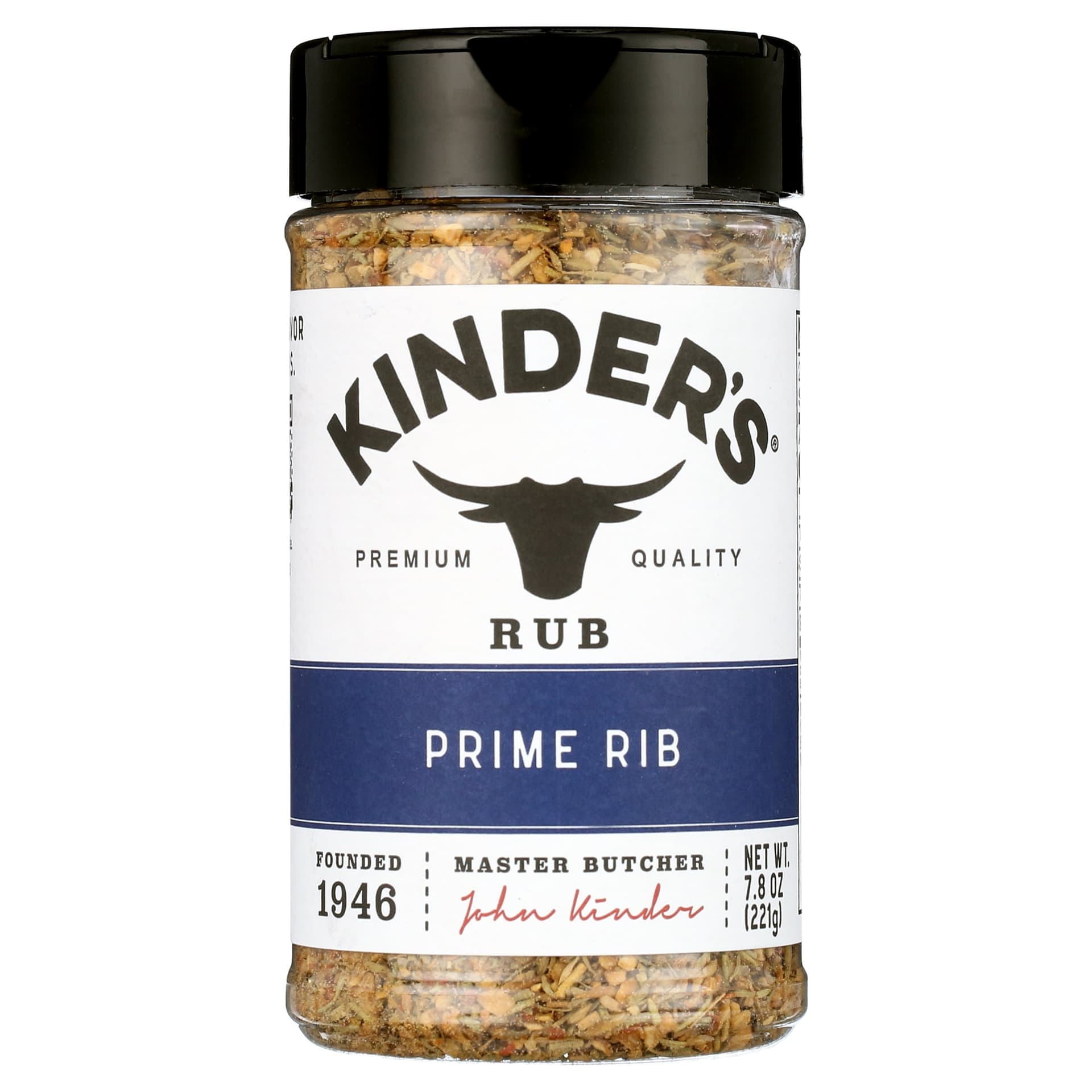
If you'd rather skip the DIY route or want a professional-grade blend dialed in by experts, Kinder's Prime Rib Rub is purpose-built for exactly this application. It combines coarse salt, black pepper, garlic, onion, and a proprietary herb blend designed to create that signature steakhouse bark.
The advantage of a commercial rub like this is consistency and convenience. You're not guessing ratios or worrying about clumping. Just coat the roast, let it rest, and roast. It's especially clutch when you're managing a dozen other holiday dishes and don't have time to measure and mix.
Apply it the same way: oil the roast, coat heavily, refrigerate uncovered overnight. Kinder's also works beautifully on ribeye steaks, standing rib roasts, or even beef tenderloin if you're going in a different direction.
Advanced Technique: Compound Butter + Rub
For an extra-luxe finish, combine your rub with a compound butter during the final stage of cooking. This technique is common in high-end steakhouses and adds a glossy, rich coating.
How to do it:
- Soften 4 tablespoons of unsalted butter and mix in 1 tablespoon of your rub, plus 1 tablespoon of finely chopped fresh parsley.
- After your prime rib comes out of the oven and while it rests, brush or dollop the compound butter over the top. It will melt into the crust and baste the meat.
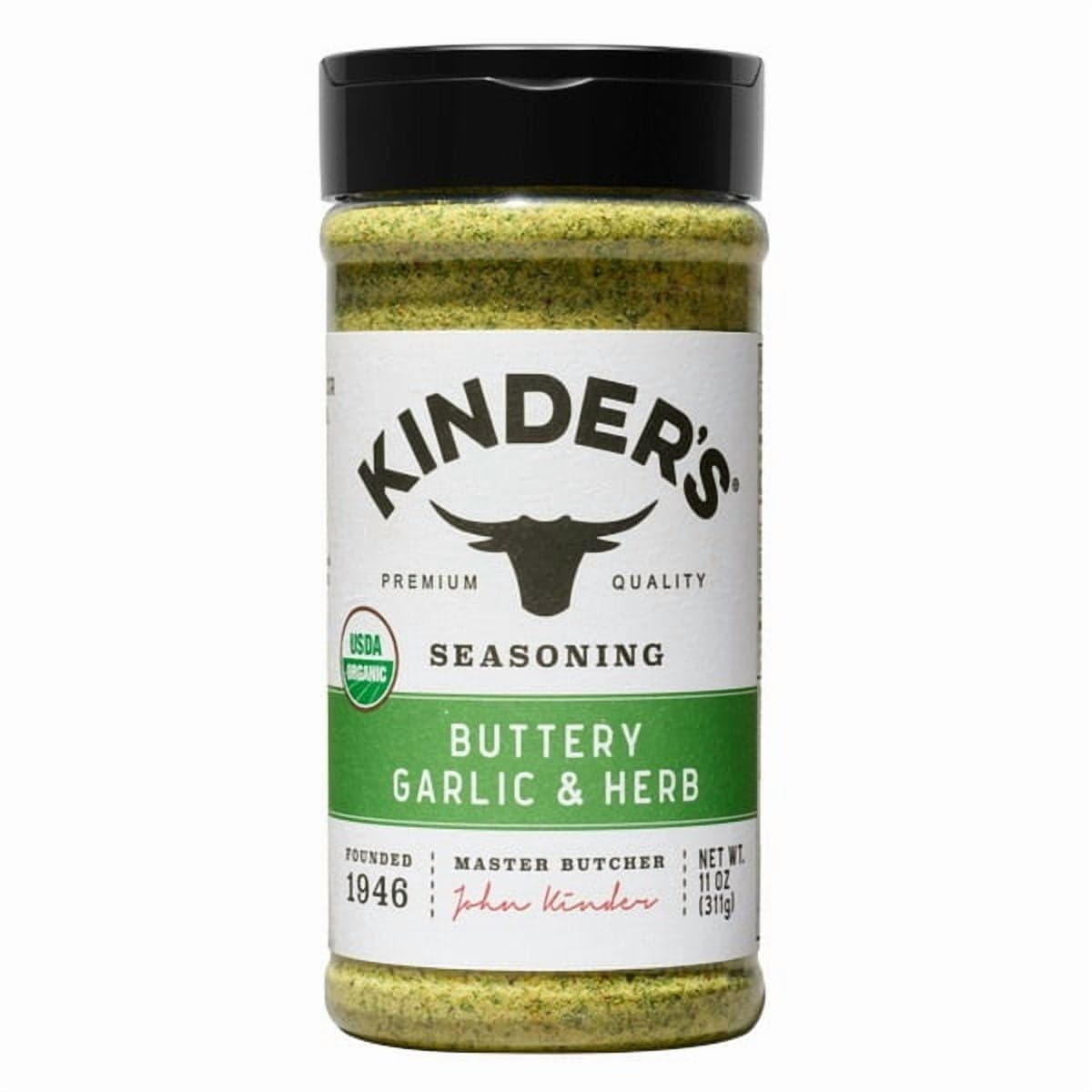
If you want even more garlic punch and herbal complexity, try mixing Kinder's Buttery Garlic and Herb Seasoning directly into softened butter. This USDA Organic blend has roasted garlic, parsley, chives, and a buttery base that melts into the roast for an unforgettable finish. It's also fantastic whisked into mashed potatoes or drizzled over roasted vegetables as part of your holiday spread.
The Reverse Sear Method for Prime Rib
Your rub is only half the equation. The cooking method determines whether that crust delivers or turns into a charred mess. The reverse sear—low and slow, then high heat—is the gold standard for prime rib.
Step 1: Low and Slow Roast
Preheat your oven to 225-250°F. Place the seasoned roast on a wire rack over a roasting pan, bone-side down. Insert a probe thermometer into the thickest part of the meat (not touching bone).
Roast until the internal temperature reaches 110-115°F for medium-rare (about 3-4 hours for a 5-6 pound roast). This slow cook ensures even doneness from edge to edge and gives the rub time to set into a flavorful crust.
Step 2: Rest and Crank the Heat
Remove the roast and tent loosely with foil. Let it rest for 20-30 minutes while you crank your oven (or a separate grill) to 500-550°F.
Step 3: The Sear
Return the roast to the hot oven or grill for 6-10 minutes, just until the exterior turns deep golden brown and the internal temp hits 120-125°F for medium-rare (it will coast up to 130-135°F while resting).
This method gives you a crackling, caramelized crust without overcooking the interior. The rub transforms into a savory, slightly sweet bark that rivals any steakhouse.
Common Prime Rib Rub Mistakes (and How to Avoid Them)
Mistake #1: Not Salting Early Enough
Applying your rub 30 minutes before cooking won't give the salt time to penetrate. You'll get surface seasoning but no deep flavor. Always aim for at least 4 hours, preferably overnight.
Mistake #2: Using Too Much Sugar
Sugar is great for caramelization, but too much can burn during the long roast. Stick to 1-2 teaspoons per roast. If you're using a rub with significant sugar content, consider applying it after the low-temperature phase, just before the high-heat sear.
Mistake #3: Skipping the Oil
Dry rubs need a binder. A light coat of oil helps the spices stick and promotes even browning. Without it, you'll lose half your rub to the roasting pan.
Mistake #4: Overcrowding the Flavors
Prime rib is a premium cut with incredible natural flavor. Your rub should enhance, not bury it. Stick to classic savory, herbal, and peppery notes. Save the exotic spices for other cuts.
Pairing Your Prime Rib Rub with Sides
A well-seasoned prime rib plays nicely with classic holiday sides, but you can also branch out. Roasted Brussels sprouts, garlic mashed potatoes, creamed spinach, and Yorkshire pudding are all traditional pairings.
If you want to tie the meal together with a unified seasoning thread, use your prime rib rub (or a complementary seasoning) on your vegetables. Toss baby potatoes or root vegetables with olive oil and a sprinkle of Kinder's Woodfired Garlic Seasoning before roasting. The roasted garlic and herb profile echoes the prime rib crust and makes the whole table feel cohesive.
Leftover Prime Rib? Use That Rub Again
If you're lucky enough to have leftover prime rib (it happens less often than you'd think), you can repurpose both the meat and the rub. Slice the beef thin and reheat gently in au jus for French dip sandwiches. Use the same rub on the next batch of ribeyes or strip steaks—it's a universal steakhouse blend.
You can also double the rub recipe and store the extra in an airtight container for up to six months. It works on pork roasts, bone-in pork chops, or even roasted chicken thighs.
Beyond the Holidays: Year-Round Rib Roast
Prime rib doesn't have to be a once-a-year event. Bone-in ribeye roasts go on sale periodically, and the reverse sear method works just as well for a smaller 2-3 rib section. You can nail a restaurant-quality roast for a Sunday dinner or special occasion any time of year.
The same rub formula adapts easily to individual ribeye steaks. Use about 1 teaspoon of rub per steak, apply 30-60 minutes before cooking, and sear in a cast-iron skillet or on a hot grill. The crust develops faster on steaks due to the higher surface-area-to-volume ratio, but the flavor profile is identical.
Why Kinder's Seasonings Work So Well for Big Cuts
Kinder's builds its rubs and seasonings specifically for high-heat cooking and long roasts. The blends use coarse salt and larger granules that don't dissolve too quickly, meaning the seasoning stays put during the cook instead of running off.
The Prime Rib Rub is balanced for beef, with enough salt to penetrate a thick roast and enough garlic and herbs to stand up to the richness of prime rib. It's not a one-note seasoning—it's a complete flavor system designed to deliver that crust everyone fights over.
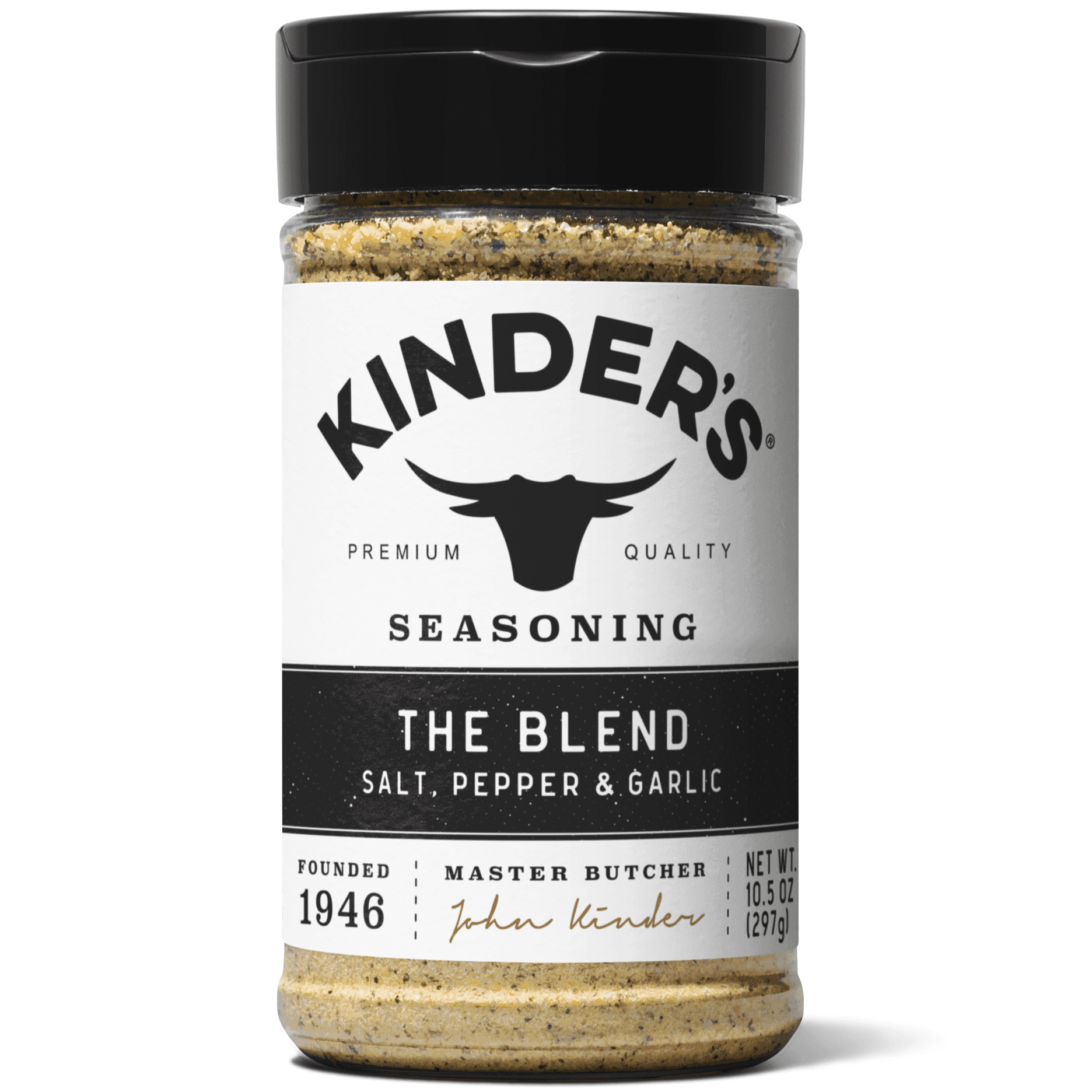
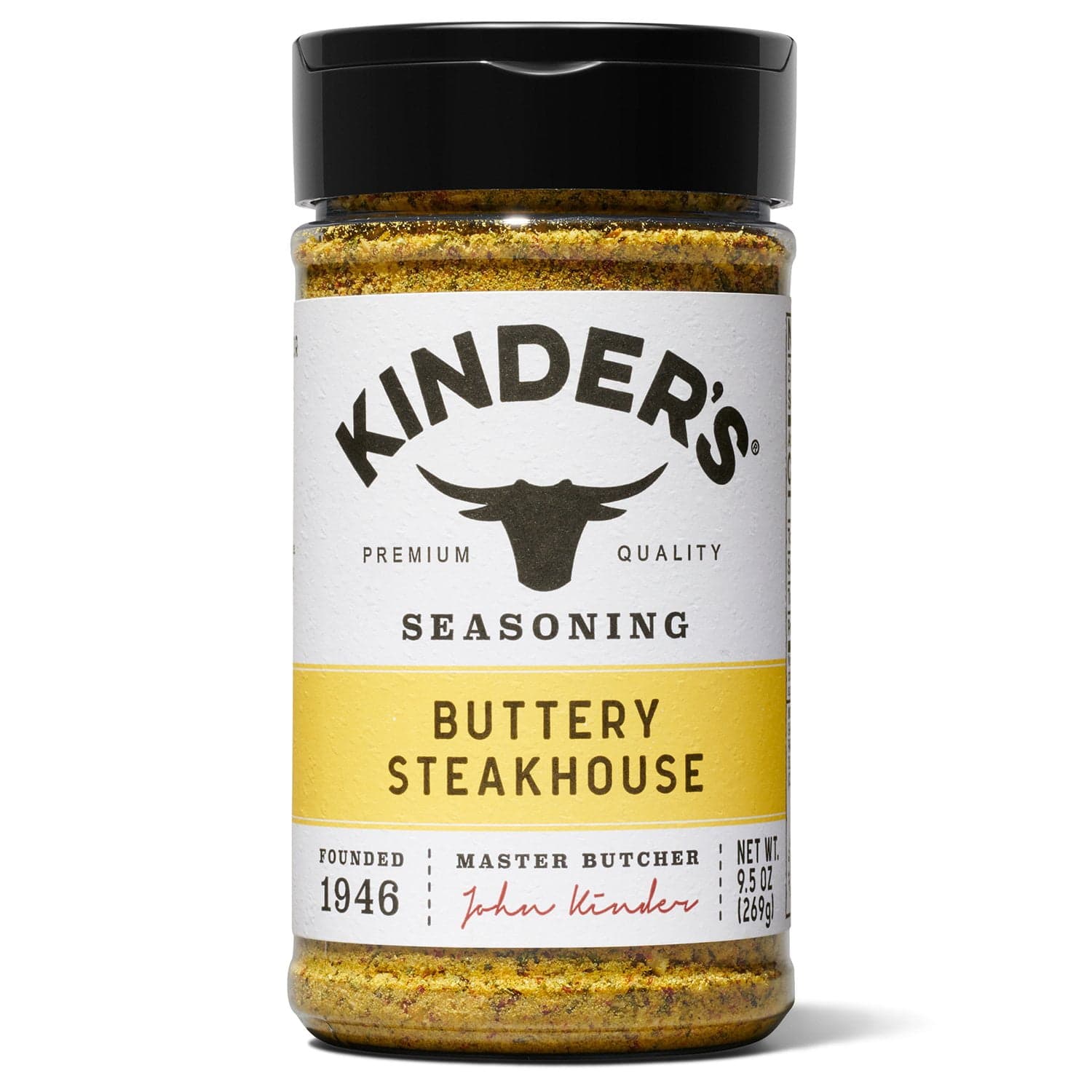
If you want to experiment with different profiles, Kinder's Buttery Steakhouse Seasoning offers a slightly richer, more butter-forward take that's also excellent on prime rib. It includes sea salt, garlic, butter powder, and black pepper, creating a creamy, savory crust that feels indulgent without being heavy.
Final Tips for Prime Rib Success
Even with the perfect rub, a few technique details make or break your roast:
- Use a probe thermometer: Guessing doneness by time alone is a recipe for disappointment. A reliable digital thermometer is non-negotiable.
- Let it rest: Resting allows the juices to redistribute. Cut too early and you'll lose precious moisture to the cutting board.
- Save the drippings: The rendered fat and fond in your roasting pan make incredible au jus. Deglaze with beef stock and a splash of red wine, strain, and serve alongside the sliced roast.
- Slice against the grain: Identify the direction of the muscle fibers and cut perpendicular to them for maximum tenderness.
Bring Steakhouse Flavor Home This Holiday
Mastering the prime rib rub is one of the highest-impact skills you can develop as a home cook. It transforms an already impressive cut into a jaw-dropping centerpiece that tastes like it came from a $200-per-person steakhouse. Whether you build your own blend from scratch or reach for a pro-grade option like Kinder's Prime Rib Rub, the key is generous seasoning, patience, and proper technique.
This holiday season, skip the guesswork. Season your roast heavily, let it rest overnight, and execute the reverse sear. Your guests will remember that crust long after the leftovers are gone.
Ready to level up your holiday roast game? Grab everything you need—from Kinder's Prime Rib Rub to Buttery Garlic and Herb Seasoning—and make this the year your prime rib becomes legendary. Shop our full collection of premium seasonings and sauces, and bring steakhouse flavor to your table.
Shop the products mentioned in this article
Free shipping on every order. No minimums, no gimmicks.