What Makes a Great Korean BBQ Sauce (+ How to Use It)
Korean BBQ sauce balances sweet, savory, and umami with gochujang, soy, sesame, and fruit. Learn what separates great from good and how to use it at home.
Korean BBQ sauce has exploded in popularity over the past few years, moving from restaurant menus to home kitchens and TikTok feeds. But what actually makes a great Korean BBQ sauce stand out from the dozens of bottles lining grocery shelves? The answer comes down to balance—sweet meets savory, umami meets heat, and fruit meets fermentation in a glaze that clings to meat, vegetables, and rice with equal ease.
Whether you're grilling short ribs, tossing wings, or building a viral rice bowl, understanding the anatomy of Korean BBQ sauce will help you choose better bottles, tweak recipes with confidence, and unlock flavors that go way beyond "Asian-style sweet and spicy."
The Five Pillars of Korean BBQ Sauce
Authentic Korean BBQ sauce—whether it's a bulgogi marinade, a galbi glaze, or a modern fusion wing sauce—rests on five foundational flavor components. Miss one, and the sauce feels flat or one-dimensional. Nail all five, and you get that addictive, can't-stop-eating quality that defines the best Korean barbecue.
1. Sweetness (But Not Just Sugar)
Sweetness is non-negotiable in Korean BBQ sauce, but the source matters. Traditional recipes rely on ingredients like Asian pear, apple, or honey to bring natural fruit sugars that caramelize beautifully on the grill. Brown sugar, corn syrup, or even rice syrup add depth and help the sauce cling to meat during cooking.
Great Korean BBQ sauces layer multiple sweet elements—fruit for brightness, sugar for caramelization, and sometimes a touch of mirin or sweet rice wine for complexity. This prevents the cloying, one-note sweetness you find in lower-quality bottled sauces.
2. Savory Umami Depth
The backbone of any Korean BBQ sauce is umami, typically delivered through soy sauce, doenjang (fermented soybean paste), or anchovy-based broths. Soy sauce is the most common base, providing saltiness and that deep, savory richness that makes the sauce taste "meaty" even before it hits the grill.
Premium sauces often use naturally brewed soy sauce rather than chemically hydrolyzed versions. You'll taste the difference—naturally brewed soy has more complexity, less harsh saltiness, and a rounder finish. Some modern Korean BBQ sauces also incorporate MSG or mushroom extract to amp up umami without adding more salt.
3. Gochujang and Controlled Heat
Gochujang—Korean fermented red chili paste—is the signature ingredient that sets Korean BBQ sauce apart from Japanese teriyaki or Chinese char siu. It brings mild-to-medium heat, a brick-red color, and a funky, fermented complexity that you can't replicate with sriracha or cayenne.
Great Korean BBQ sauces use gochujang judiciously. The goal isn't to make your mouth burn; it's to add warmth, a slight tingle, and a flavor that keeps you coming back for another bite. Lower-quality sauces often skip gochujang entirely and rely on generic "chili sauce," which kills the authenticity.
4. Aromatics: Garlic, Ginger, and Sesame
Korean cuisine loves garlic—and Korean BBQ sauce is no exception. Fresh garlic (or garlic puree) adds pungency and sharpness that mellows into sweetness when grilled. Ginger brings a floral, warming note that complements both the sweetness and the heat.
Toasted sesame oil is the final aromatic pillar. Just a small amount adds nutty richness and an unmistakable Korean flavor signature. Some sauces also include toasted sesame seeds for texture and visual appeal. If a sauce lists "sesame oil" near the bottom of the ingredient list, it's probably not enough to make a real impact.
5. Acidity and Brightness
Sweetness and umami can become heavy without a balancing acid. Rice vinegar, apple cider vinegar, or citrus juice (yuzu, lime, or lemon) cut through richness and keep the sauce lively. Acidity also helps tenderize meat in marinades and prevents the sauce from tasting syrupy.
The best Korean BBQ sauces hit a sweet-savory note up front, then finish clean with a bright, tangy lift. If a sauce tastes thick and sticky with no refreshing contrast, it's missing this crucial element.
Texture Matters: Thin Marinade vs. Thick Glaze
Korean BBQ sauces come in two main consistencies, and knowing the difference will change how you cook with them.
Thin Marinades
Traditional bulgogi and galbi marinades are relatively thin and watery. They're designed to penetrate meat deeply, tenderize it (thanks to fruit enzymes and acidity), and infuse flavor over several hours. These marinades often contain pureed pear or kiwi, which break down protein fibers and result in ultra-tender meat.
Thin marinades are ideal for:
- Overnight marinating of short ribs, pork belly, or chicken thighs
- Stir-fries where the sauce needs to coat quickly and evenly
- Mixing into ground meat for burgers or meatballs
Thick Glazes and Finishing Sauces
Modern Korean BBQ sauces—especially those marketed as wing sauces or finishing glazes—are thicker, stickier, and more concentrated. They're built to cling to grilled or fried foods, caramelize under high heat, and deliver bold flavor in every bite without requiring a long marinating time.
Thick glazes work best for:
- Basting during the last few minutes of grilling
- Tossing with wings, drumsticks, or crispy tofu
- Drizzling over rice bowls, tacos, or grain salads
- Dipping sauce for dumplings, spring rolls, or grilled skewers
If you're shopping for a Korean BBQ sauce, check the consistency. If you want a marinade, look for something pourable. If you want a glaze, go for something that coats the back of a spoon.
Red Flags: What to Avoid in Store-Bought Korean BBQ Sauce
Not all Korean BBQ sauces are created equal. Here's what separates the great from the mediocre:
High-Fructose Corn Syrup as the First Ingredient
If HFCS tops the ingredient list, you're buying sugar with flavoring, not a balanced sauce. A little corn syrup for texture is fine, but it shouldn't be the star.
No Gochujang or Fermented Ingredients
Authentic Korean BBQ sauce should list gochujang, gochugaru (Korean chili flakes), doenjang, or fermented soy. If the label just says "chili sauce" or "spices," it's probably a generic Asian-style sauce with a Korean label.
Artificial Smoke Flavor
Some brands add liquid smoke to mimic grilled flavor. It's not inherently bad, but it often tastes artificial and covers up a lack of real depth. Great Korean BBQ sauce shouldn't need smoke flavor—it should taste good enough to eat straight from the spoon.
Too Much Sodium
Korean BBQ sauce will always be salty (soy sauce is a core ingredient), but some brands go overboard. Check the label: anything over 400mg of sodium per tablespoon can be overwhelming, especially if you're using it as a marinade or mixing it into a dish.
How to Use Korean BBQ Sauce Like a Pro
Once you've found a great Korean BBQ sauce, the fun begins. Here are the best ways to put it to work in your kitchen.
Marinate Beef Short Ribs (Galbi-Style)
Korean short ribs are the gold standard for Korean BBQ. Use a thin marinade and let the ribs sit for at least 4 hours (or overnight). Grill over high heat, basting with extra sauce in the final minutes. The result: caramelized edges, juicy interiors, and flavor that soaks all the way to the bone.
Glaze Chicken Wings
Toss fried or baked wings in a thick Korean BBQ glaze right out of the oil. The sticky sauce clings to every crevice, and the contrast between crispy skin and sweet-spicy glaze is addictive. For an even better finish, garnish with sesame seeds and sliced scallions.
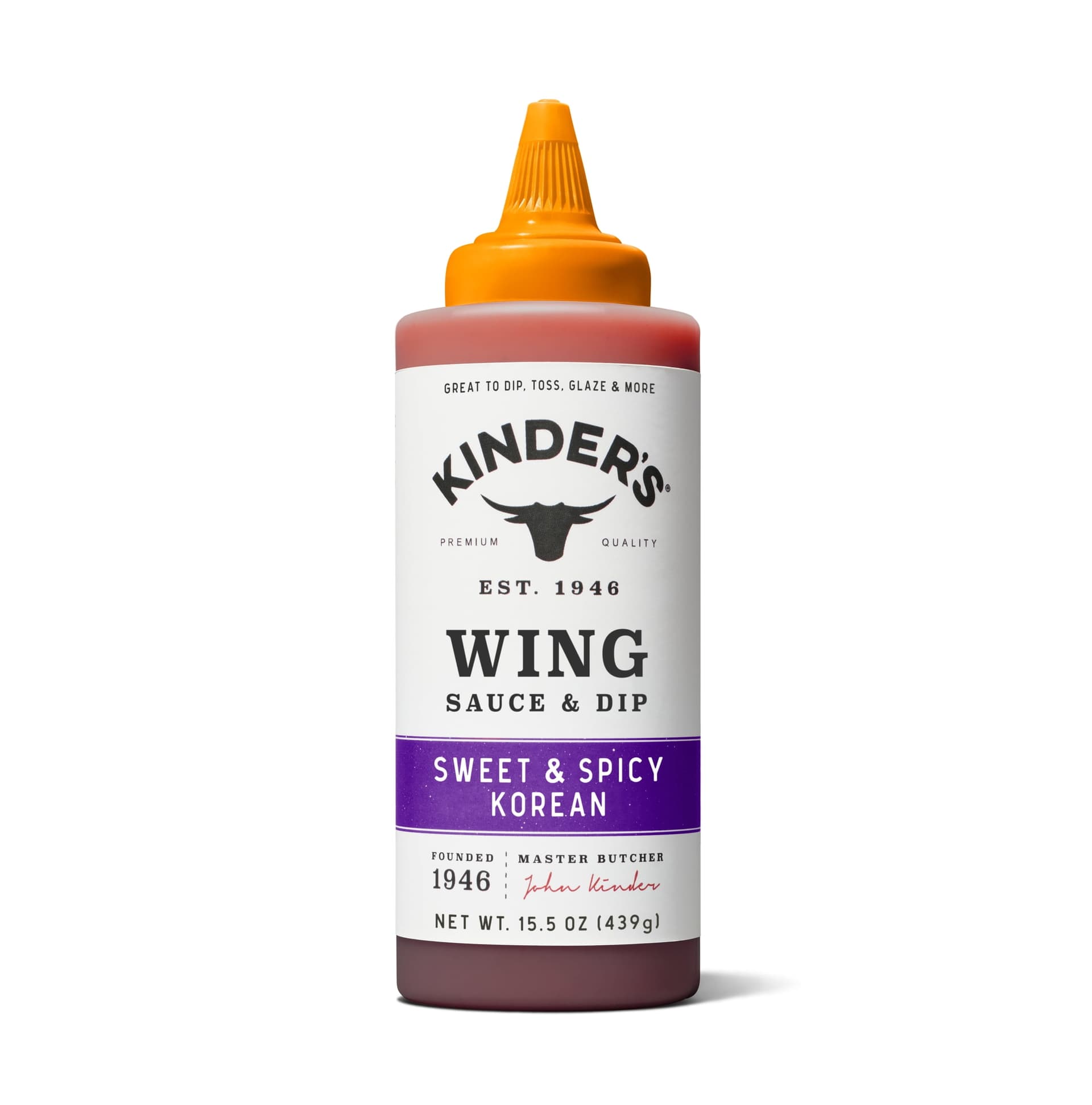
If you want to experiment with Korean-inspired wing flavors, Kinder's Sweet & Spicy Korean Wing Sauce delivers that signature balance of gochujang heat, sweetness, and sesame in a ready-to-use format. It's thick enough to glaze wings straight off the grill or toss with crispy fried chicken.
Build a Bulgogi Rice Bowl
Marinate thinly sliced ribeye, sirloin, or pork shoulder in Korean BBQ sauce for 2–4 hours. Sear in a smoking-hot skillet or grill until caramelized. Serve over steamed rice with kimchi, pickled vegetables, a fried egg, and a drizzle of extra sauce. It's the ultimate 15-minute weeknight dinner once the meat is marinated.
Stir-Fry Vegetables
Korean BBQ sauce isn't just for meat. Toss it with stir-fried zucchini, bell peppers, mushrooms, snap peas, or broccoli for a quick vegetable side that actually tastes exciting. The sauce caramelizes on the vegetables and creates little charred, flavorful bits.
Mix Into Ground Meat
Add 2–3 tablespoons of Korean BBQ sauce per pound of ground beef, pork, or turkey. Use it for burgers, meatballs, lettuce wraps, or stuffed peppers. The sauce keeps the meat moist, adds instant flavor, and eliminates the need for multiple seasonings.
For a fusion burger that bridges Korean and American BBQ, try mixing Korean BBQ sauce into your patties and finishing with a Korean-inspired seasoning blend. Kinder's Korean BBQ Seasoning brings gochugaru, garlic, and sesame into a dry rub format that layers beautifully with liquid sauces.
Glaze Salmon or Pork Chops
Brush Korean BBQ sauce onto salmon fillets, pork chops, or pork tenderloin during the last 3–4 minutes of cooking. The sugars caramelize under high heat, forming a glossy, slightly charred crust that locks in moisture and delivers intense flavor.
DIY Korean BBQ Sauce: A Simple Starting Recipe
If you want to make your own Korean BBQ sauce at home, here's a flexible base recipe you can tweak to taste.
Ingredients
- ½ cup soy sauce (use low-sodium if you prefer control over saltiness)
- ¼ cup brown sugar or honey
- 2 tablespoons gochujang (adjust for heat preference)
- 2 tablespoons rice vinegar
- 1 tablespoon toasted sesame oil
- 3 cloves garlic, minced or grated
- 1 tablespoon fresh ginger, grated
- 1 tablespoon mirin or rice wine (optional)
- 1 teaspoon gochugaru (Korean chili flakes) for extra heat
- 1 Asian pear or apple, grated (optional, for tenderizing and sweetness)
Instructions
- Whisk all ingredients together in a bowl until the sugar dissolves.
- Taste and adjust: more gochujang for heat, more sugar for sweetness, more vinegar for tang.
- Use immediately as a marinade, or simmer in a saucepan for 5–7 minutes to thicken into a glaze.
- Store in an airtight container in the fridge for up to two weeks.
This base recipe gives you full control over sweetness, heat, and consistency. Want it thicker? Simmer longer or add a cornstarch slurry. Want it fruitier? Increase the pear or add a splash of pineapple juice.
Pairing Korean BBQ Sauce with Other Seasonings
Korean BBQ sauce plays well with other bold seasonings, especially if you're building layers of flavor for grilling or roasting.
Garlic-Forward Seasonings
Korean BBQ sauce already contains garlic, but doubling down with a garlic-heavy seasoning rub can intensify the savory base. Dry rubs with roasted garlic, black garlic, or garlic powder pair especially well with Korean-marinated meats.
Smoky and Sweet Rubs
If you're grilling over charcoal or wood, a smoky-sweet seasoning can complement the fruity sweetness of Korean BBQ sauce. Think hickory, applewood, or even a touch of chipotle. The smoke deepens the caramelization and adds an American BBQ crossover vibe.
Umami Boosters
Seasonings with mushroom powder, MSG, or nutritional yeast can amplify the savory depth of Korean BBQ sauce. A light dusting before or after saucing adds an extra umami punch without adding more liquid.
For a umami-rich finishing touch on Korean BBQ dishes, consider a sprinkle of Momofuku Savory Seasoned Salt. David Chang's blend brings shio koji, mushroom, and kombu into a single seasoning that echoes the fermented, savory notes in traditional Korean sauces.
Korean BBQ Sauce vs. Teriyaki: What's the Difference?
People often confuse Korean BBQ sauce with teriyaki, but they're distinct in flavor, texture, and use.
Teriyaki is Japanese, built on soy sauce, mirin, sake, and sugar. It's glossy, sweet, and mild with no heat. The flavor is clean and straightforward—great for glazing salmon or chicken, but not as complex or funky as Korean BBQ sauce.
Korean BBQ sauce is bolder and more layered. It includes gochujang for heat, sesame for nuttiness, garlic and ginger for aromatics, and often fruit for natural sweetness and tenderizing enzymes. The fermented elements (gochujang, doenjang, naturally brewed soy) give it a deeper, funkier profile.
In short: teriyaki is elegant and restrained. Korean BBQ sauce is loud, sticky, and unapologetically flavorful.
Common Mistakes When Cooking with Korean BBQ Sauce
Adding Sauce Too Early
If you brush Korean BBQ sauce on meat at the start of grilling, the sugars will burn before the meat is cooked through. Always apply sauce in the final 3–5 minutes of cooking, or use it as a post-grill glaze.
Skipping the Baste
One coat isn't enough. For maximum flavor and caramelization, baste 2–3 times in the final minutes of grilling. Each layer builds up that signature glossy, sticky finish.
Not Balancing Sweetness
Some bottled Korean BBQ sauces are very sweet. If yours tastes like candy, balance it out with a splash of soy sauce, rice vinegar, lime juice, or a pinch of salt. You can also thin it with a little water or broth to dial back intensity.
Using It Only for Meat
Korean BBQ sauce is incredibly versatile. Don't limit it to beef and chicken—try it on roasted cauliflower, grilled eggplant, tofu, shrimp, or even as a pizza sauce base. The umami and sweetness work across proteins and vegetables alike.
Where Korean BBQ Sauce Shines: Best Applications
Here's a quick reference guide for when to reach for Korean BBQ sauce:
- Short ribs and pork belly: Marinate overnight, grill over high heat, baste at the end.
- Chicken thighs and drumsticks: Marinate for 2–4 hours, grill or bake, glaze in the final minutes.
- Wings: Fry or bake until crispy, toss in thick sauce immediately after cooking.
- Stir-fries: Add sauce in the last 30 seconds of cooking for a glossy, caramelized finish.
- Rice bowls: Use as both marinade for protein and drizzle for the finished bowl.
- Tacos and lettuce wraps: Marinate protein, grill, and serve with pickled vegetables and fresh herbs.
- Vegetables: Toss with roasted or grilled veggies for a sweet-savory glaze.
Final Thoughts: What Makes a Great Korean BBQ Sauce
A great Korean BBQ sauce is a balancing act. It needs sweetness without being cloying, heat without being punishing, umami without being one-note, and brightness to tie it all together. The best sauces use real gochujang, naturally brewed soy sauce, toasted sesame oil, and fresh aromatics. They're thick enough to cling but not gloopy, sweet enough to caramelize but not burn, and complex enough to keep you reaching for another bite.
Whether you're shopping for a bottle or making your own, understanding these fundamentals will help you choose better, cook smarter, and unlock the addictive, layered flavors that make Korean BBQ one of the most crave-worthy styles of grilling on the planet.
Ready to bring Korean BBQ flavor to your next cookout? Explore our collection of Korean-inspired sauces and seasonings, grab your favorite cut of meat, and get grilling. Once you nail that sweet-spicy-savory balance, you'll never look at BBQ sauce the same way again.
Shop the products mentioned in this article
Free shipping on every order. No minimums, no gimmicks.