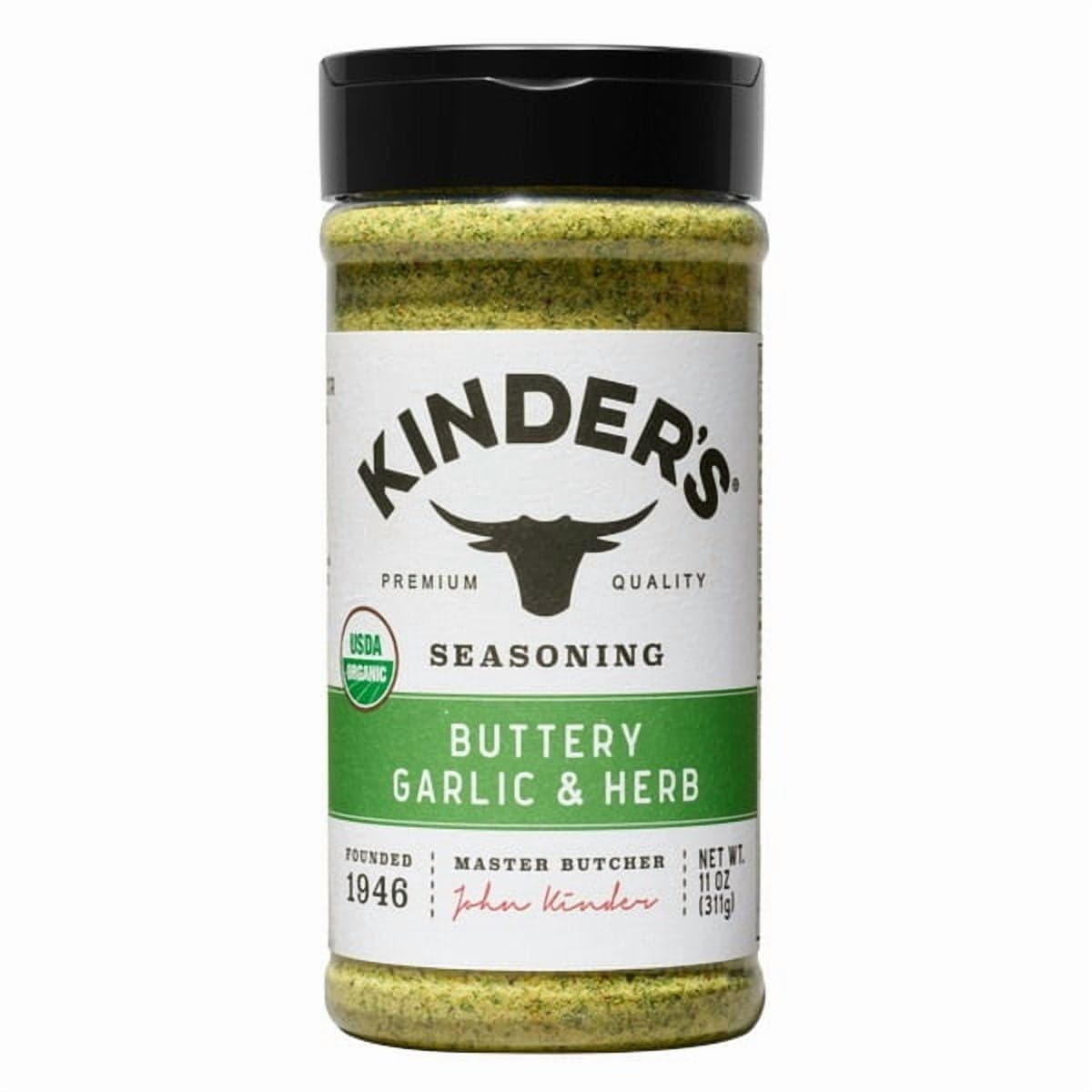
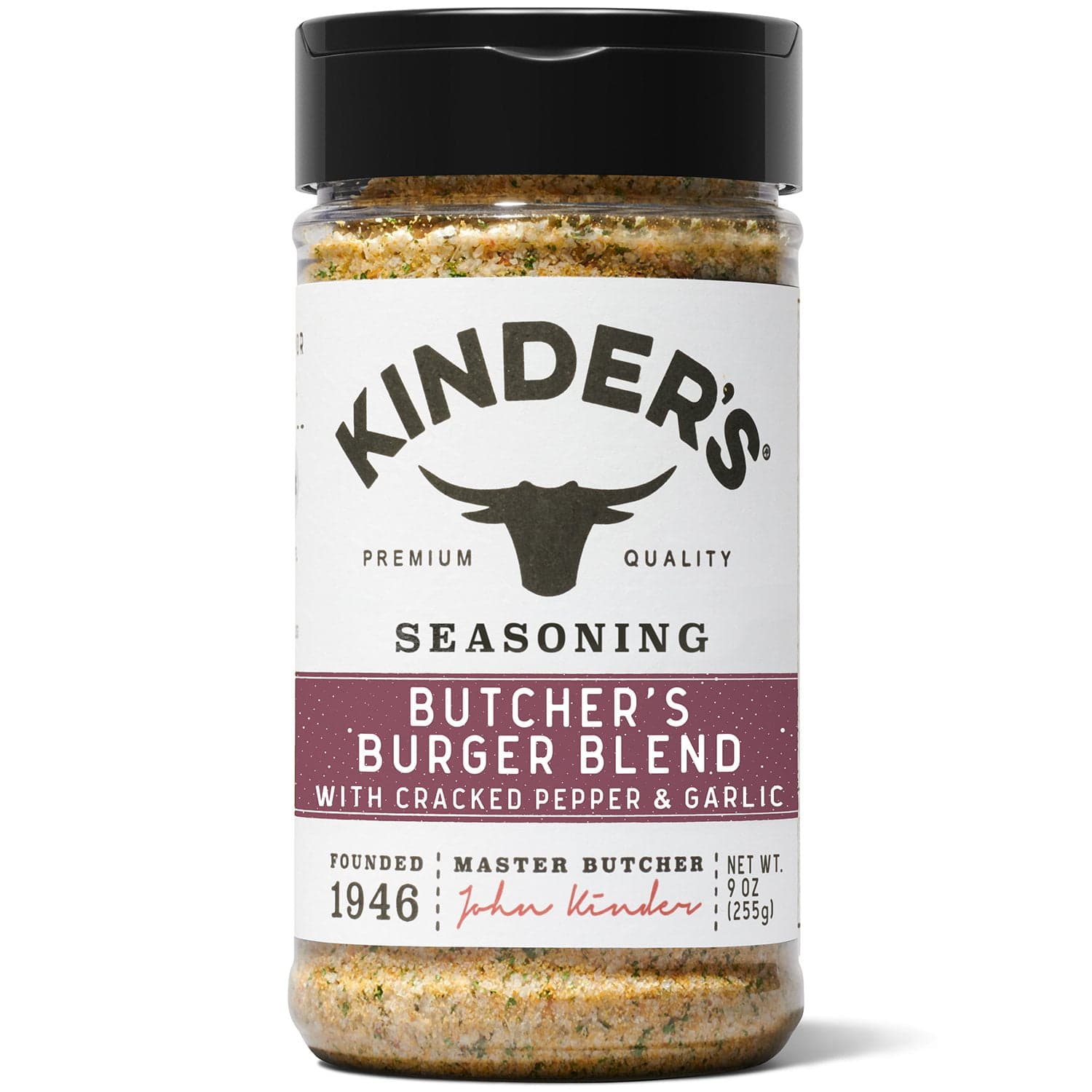
Best Kinder's Steak Seasoning: 6 Blends Tested & Ranked
We tested six Kinder's steak seasonings to find the best blend for ribeye, strip, sirloin, and more. Here's what actually delivers steakhouse flavor at home.
Finding the best Kinder's steak seasoning means matching the right blend to your steak cut, cooking method, and flavor preference. Kinder's makes more than half a dozen seasonings marketed for beef, but not all of them perform equally on a ribeye versus a New York strip. We tested six top contenders side-by-side on multiple cuts to identify which bottles deserve permanent real estate on your grill cart.
This guide breaks down flavor profiles, ideal use cases, and real-world performance for each seasoning. Whether you're searing a thick-cut porterhouse on cast iron or reverse-searing a tomahawk over charcoal, you'll know exactly which Kinder's blend to reach for.
Why Kinder's Dominates the Steak Seasoning Category
Kinder's built its reputation in Northern California BBQ joints before hitting retail shelves nationally. The brand's steak seasonings share a few common strengths: coarse grind for texture, real butter powder for richness, and balanced salt levels that enhance rather than overpower beef.
Unlike generic steak rubs that lean heavily on black pepper and little else, Kinder's blends layer garlic, herbs, umami-rich ingredients like mushroom powder, and carefully calibrated sweetness. The result is a seasoning that tastes intentional—like something a steakhouse kitchen actually uses—rather than a one-note pepper bomb.
The downside? With so many options, it's not immediately obvious which bottle suits your cooking style. A seasoning that shines on a lean sirloin might overwhelm a heavily marbled ribeye. Let's fix that.
The 6 Kinder's Steak Seasonings We Tested
We focused on blends explicitly designed for steak or that perform well on beef. Here's the lineup:
- Buttery Steakhouse Seasoning: The flagship steak blend with garlic, butter, and herbs
- Dry-Aged Steak Seasoning: Designed to mimic the umami funk of dry-aged beef
- Prime Rib Rub: Herb-forward with rosemary and thyme
- Prime Steak Black Garlic & Truffle: Elevated with black garlic and truffle essence
- Whiskey Peppercorn: Bold pepper with whiskey barrel undertones
- Brazilian Steakhouse Seasoning: Inspired by churrascaria-style picanha
Each seasoning was tested on both ribeye and New York strip steaks, cooked to medium-rare over a 500°F gas grill. We evaluated crust development, flavor balance, and how well the seasoning complemented (rather than masked) the beef.
Best Overall: Kinder's Buttery Steakhouse Seasoning
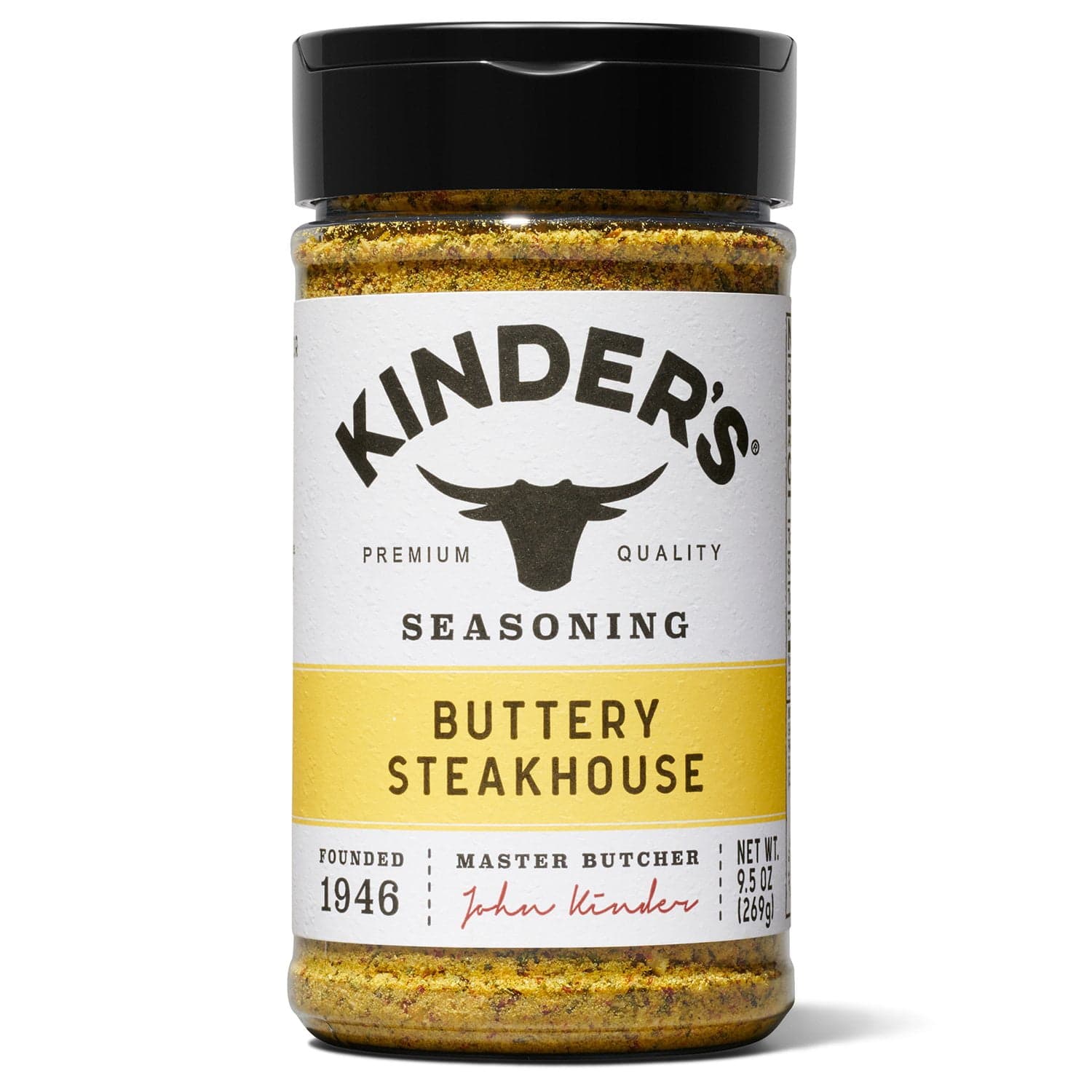
If you only buy one steak seasoning, make it Kinder's Buttery Steakhouse Seasoning. This 9.5-ounce bottle delivers exactly what you want from a steakhouse crust: garlic-forward flavor, rich butter notes, and a savory-sweet finish that works on virtually any cut.
The blend includes sea salt, garlic, black pepper, butter powder, and a hint of brown sugar. The coarse grind creates excellent texture on the crust without turning gritty. Unlike finer seasonings that dissolve completely, Buttery Steakhouse leaves little pockets of concentrated garlic and pepper that burst when you bite into the crust.
It performed exceptionally well on ribeye, where the butter powder amplified the natural richness without making the steak taste greasy. On leaner cuts like sirloin and strip, it added just enough fat-soluble flavor to make up for what the meat lacks. The sweetness is restrained—you'll notice it in the caramelized crust, but it doesn't veer into Kansas City BBQ territory.
When to Use Buttery Steakhouse
This is your everyday steak seasoning. Use it on:
- Ribeye, strip, sirloin, and T-bone
- Grilled, pan-seared, or reverse-seared steaks
- Steak tips, kabobs, and stir-fry beef
- Burgers when you want a steakhouse vibe
Apply generously 15–30 minutes before cooking to let the salt penetrate. For extra-thick steaks, consider salting 2–4 hours ahead (or overnight, uncovered in the fridge) for deeper seasoning and a drier surface that sears better.
Best for High-End Cuts: Kinder's Dry-Aged Steak Seasoning
Dry-aged beef commands premium prices because the aging process concentrates flavor and develops funky, nutty, almost cheese-like notes. Kinder's Dry-Aged Steak Seasoning attempts to replicate that complexity on standard wet-aged supermarket beef—and it mostly succeeds.
The secret is mushroom powder and yeast extract, which deliver umami depth without tasting overtly like mushrooms. There's also garlic, thyme, and a touch of anchovy powder for savoriness. The result is a seasoning that makes a $15 Choice ribeye taste closer to a $40 dry-aged Prime cut.
On actual dry-aged beef, this seasoning is redundant—you're doubling down on flavors that are already present. But on standard steaks, especially well-marbled cuts like ribeye or strip, it adds a layer of sophistication that simple salt-and-pepper can't match.
When to Use Dry-Aged Steak Seasoning
Save this for special occasions and high-marbling cuts:
- Ribeye, strip, porterhouse, and tomahawk steaks
- Flat iron and hanger steak (which benefit from extra umami)
- Any time you want to elevate a standard supermarket steak
Avoid using it on already-dry-aged beef or on very lean cuts like filet mignon, where the bold umami can overpower the mild beef flavor. Also skip it on marinated steaks—the flavors will clash.
Best for Leaner Cuts: Kinder's Prime Rib Rub
Leaner steaks like sirloin, top round, and even tenderloin need a little extra help in the flavor department. Kinder's Prime Rib Rub is built for exactly that scenario, with rosemary, thyme, garlic, and a restrained hand on the salt.
The herb profile is pronounced but not overwhelming. Rosemary is the lead note, backed by savory thyme and a whisper of onion. There's enough garlic to keep things interesting but not so much that it dominates. The overall effect is classic and clean—this is the seasoning your grandmother would have used on a Sunday roast, dialed up for modern grilling.
We tested it on a whole beef tenderloin and on individual sirloin steaks. In both cases, the herbs added complexity without masking the beef. The crust came out aromatic and slightly crispy, with visible flecks of green that look great on a platter.
When to Use Prime Rib Rub
Best for lean or mild cuts that need herbal lift:
- Sirloin, top round, and London broil
- Whole beef tenderloin or filet mignon steaks
- Prime rib roast (obviously) and tri-tip
- Any cut you're serving sliced, where the herb crust creates visual appeal
This is also a solid choice for reverse-seared or oven-roasted preparations, where the longer cooking time lets the herbs bloom without burning.
Best for Bold Flavor Lovers: Kinder's Whiskey Peppercorn
If you think most steak seasonings are too timid, Kinder's Whiskey Peppercorn Seasoning is your speed. This blend hits hard with cracked black pepper, garlic, and a smoky-sweet whiskey barrel undertone that lingers on the finish.
The pepper is front and center—expect real heat, not just mild peppery flavor. But unlike one-dimensional peppercorn crusts, the whiskey notes (likely from natural smoke flavor and a touch of molasses) add warmth and complexity. Garlic and onion round out the profile, keeping it from tasting like you just dumped a pepper mill on your steak.
This seasoning shines on fattier cuts where the richness can stand up to the bold spice. It created an aggressively flavorful crust on ribeye, with a slight sweetness that caramelized beautifully over high heat. On leaner cuts, it was a bit much—the pepper overpowered the beef.
When to Use Whiskey Peppercorn
For pepper lovers and fatty cuts only:
- Ribeye, bone-in ribeye, and cowboy cuts
- Beef short ribs and chuck steak
- Grilled or smoked brisket when you want a peppery bark
- Any steak you're serving with a mild side (skip it if you're already making peppercorn sauce)
Apply a lighter hand than you would with milder seasonings—a little goes a long way. And if you're sensitive to black pepper, this isn't the blend for you.
Best for Something Different: Kinder's Prime Steak Black Garlic & Truffle
Black garlic and truffle might sound like Instagram bait, but Kinder's pulls it off without veering into gimmick territory. The black garlic adds molasses-like sweetness and fermented depth, while the truffle (likely truffle essence rather than real truffle) contributes an earthy, almost nutty aroma.
This is the most polarizing seasoning in the lineup. Truffle haters will find it artificial; truffle fans will appreciate the restraint. The black garlic is subtle—it doesn't taste like roasted garlic, but it does add complexity that's hard to pin down. The overall profile is savory-sweet with umami depth and a lingering earthiness.
We tested it on strip steak and ribeye. On strip, it was interesting—definitely different from your standard steakhouse crust, but not necessarily better. On ribeye, the richness of the meat balanced the bold seasoning, and the truffle aroma became more of an accent than a lead note.
When to Use Prime Steak Black Garlic & Truffle
For adventurous eaters and special occasions:
- Ribeye and well-marbled strip steaks
- Date-night dinners where you want to impress
- Beef tenderloin when you want to add interest to a mild cut
- Any time you're craving something outside the traditional steak seasoning lane
Skip it if you're a steak purist or if you're cooking for a crowd with conservative tastes. And definitely don't use it alongside other strong flavors—no truffle seasoning plus blue cheese butter.
Best for Brazilian-Style Steak: Kinder's Brazilian Steakhouse Seasoning
Brazilian churrascarias season their meat simply—usually just coarse salt—and let the quality of the beef and the live-fire cooking do the work. Kinder's Brazilian Steakhouse Seasoning nods to that tradition with a straightforward blend of sea salt, garlic, black pepper, and a hint of cumin.
The cumin is the key differentiator here. It's subtle but unmistakable, adding a warm, earthy note that's common in South American grilling. There's no butter powder or sweetness—this is a leaner, cleaner seasoning that highlights the beef rather than adding layers of complexity.
It performed best on picanha (top sirloin cap), where the fat cap rendered beautifully and the seasoning created a savory, garlicky crust. On ribeye, it was fine but unremarkable—there's not enough richness in the blend to complement such a fatty cut.
When to Use Brazilian Steakhouse Seasoning
Best for lean cuts and Brazilian-style preparations:
- Picanha (top sirloin cap), especially when cooked on a skewer
- Sirloin, tri-tip, and flank steak
- Any cut you're grilling over high heat or rotisserie
- Beef skewers and steak kabobs
This is also a good choice if you're cooking for someone who finds typical American steak seasonings too rich or buttery. The clean, garlicky profile appeals to a wide audience.
How to Apply Steak Seasoning for Maximum Flavor
Even the best seasoning underperforms if you apply it incorrectly. Here's the method we used in our tests:
- Pat the steak completely dry. Moisture prevents seasoning from adhering and inhibits crust formation. Use paper towels and press firmly.
- Season generously. You need more than you think. A 12-ounce ribeye should get about 1–1.5 teaspoons per side.
- Let it rest. Minimum 15 minutes at room temperature; ideally 30–40 minutes. For steaks thicker than 1.5 inches, consider salting 2–4 hours ahead or overnight, uncovered in the fridge.
- Don't add oil. Most Kinder's blends contain enough fat (butter powder) that additional oil isn't necessary and can prevent the seasoning from sticking.
- Press it in. After seasoning, press the surface with your hand to help the blend adhere. This also helps you feel if you've seasoned evenly.
Matching Seasoning to Cooking Method
Different cooking techniques demand different seasonings:
High-heat grilling (direct heat, 500°F+): Use blends with some sugar content like Buttery Steakhouse or Whiskey Peppercorn. The sugar caramelizes and creates a flavorful crust. Avoid herb-heavy blends like Prime Rib Rub, which can burn.
Reverse sear or low-and-slow: Herb-forward blends like Prime Rib Rub excel here, where the lower initial temperature lets the herbs bloom without charring. Dry-Aged Steak Seasoning also works well because the umami flavors develop over time.
Cast-iron searing: Buttery Steakhouse and Dry-Aged are both excellent. The high, consistent heat of cast iron develops a superior crust with these blends. Avoid Whiskey Peppercorn unless you have excellent ventilation—the pepper can smoke heavily.
Sous vide + sear: Skip the seasoning during the sous vide phase (it can make the bag cloudy and the flavor muddy). Instead, pat the steak dry after the water bath and season heavily just before searing. Any of these blends work, but Buttery Steakhouse and Dry-Aged provide the most dramatic crust in a short, high-heat sear.
Common Mistakes When Using Steak Seasoning
Under-seasoning: The number-one mistake home cooks make. A thick steak needs more seasoning than you think. When in doubt, add more.
Seasoning too late: Seasoning right before the steak hits the grill means the salt hasn't had time to penetrate. You'll get surface flavor but bland interior meat.
Using the wrong blend for the cut: Don't put bold, umami-heavy seasonings on mild cuts like filet mignon, and don't use lean, simple seasonings on fatty ribeye. Match the intensity of the seasoning to the richness of the cut.
Forgetting to let the steak rest after cooking: This doesn't relate to seasoning directly, but if you skip the 5–10 minute rest, all those flavorful juices will run out onto the cutting board instead of staying in the meat.
What to Serve with Seasoned Steak
Once you've nailed the steak, keep the sides simple so the seasoning shines:
- Garlic-forward blends (Buttery Steakhouse, Dry-Aged): Pair with roasted or mashed potatoes, grilled asparagus, or a wedge salad.
- Herb blends (Prime Rib Rub): Serve with roasted root vegetables, green beans, or a classic Caesar.
- Bold blends (Whiskey Peppercorn, Black Garlic & Truffle): Balance with mild sides like baked potato, buttered corn, or sautéed spinach.
- Brazilian Steakhouse: Go traditional with rice and beans, grilled pineapple, or chimichurri sauce.
Final Verdict: Which Kinder's Steak Seasoning Should You Buy?
If you can only choose one, Kinder's Buttery Steakhouse Seasoning is the safe, versatile, crowd-pleasing option. It works on every cut, every cooking method, and every occasion. It's the bottle you'll reach for on a Tuesday night and on the Fourth of July.
If you want to expand your arsenal, add Kinder's Dry-Aged Steak Seasoning for special steaks and Kinder's Prime Rib Rub for leaner cuts. That three-bottle rotation will cover 95% of your steak-cooking scenarios.
For adventurous cooks, Whiskey Peppercorn and Prime Steak Black Garlic & Truffle add variety when you're craving something outside the norm. And if you're serious about Brazilian-style grilling, the Brazilian Steakhouse blend is a must-have.
The bottom line: Kinder's makes the best retail steak seasonings you can buy, and now you know exactly which one to grab for every situation. Stock your spice rack, fire up the grill, and get ready for the best steaks you've ever cooked at home.
Ready to upgrade your steak game? Grab your bottle of Kinder's Buttery Steakhouse Seasoning and taste the difference a real steakhouse blend makes. Your next ribeye will thank you.
Shop the products mentioned in this article
Free shipping on every order. No minimums, no gimmicks.