Best Kinder's Seasoning for Chicken: 7 Blends That Actually Work
From grilled breasts to crispy wings, discover which Kinder's seasonings deliver the best flavor on chicken. We tested seven blends to find the winners.
Chicken is America's most-cooked protein, and the right seasoning turns a bland breast into something worth craving. Kinder's has built a cult following with bold, restaurant-quality blends that skip the filler and deliver actual flavor. But with more than twenty options in the lineup, which bottles belong on your chicken?
We tested every Kinder's seasoning that makes sense on poultry—grilled thighs, baked breasts, air-fried wings, pan-seared cutlets—and ranked the blends that consistently deliver. Whether you're meal-prepping for the week or feeding a crowd on game day, this guide will point you to the bottles that earn their shelf space.
What Makes a Great Chicken Seasoning
Chicken's mild flavor is both a blessing and a challenge. It takes seasoning beautifully, but it also exposes weak blends fast. A great chicken seasoning needs three things: balance (salt, fat, acid, heat), versatility (works across cooking methods), and enough punch to stand up to white and dark meat without overwhelming either.
Kinder's seasonings excel here because most blends include dehydrated butter or butter powder, which helps flavors cling and creates a savory base that amplifies garlic, herbs, and spices. This is why Kinder's tastes richer than typical grocery-store seasonings—you're getting fat-soluble flavor compounds that bloom when they hit heat.
We evaluated each blend on three criteria: flavor complexity, ease of use, and how well it performs across different cuts and cooking methods. The goal was simple—find the seasonings you can reach for every time, not just once in a while.
The Top 7 Kinder's Seasonings for Chicken
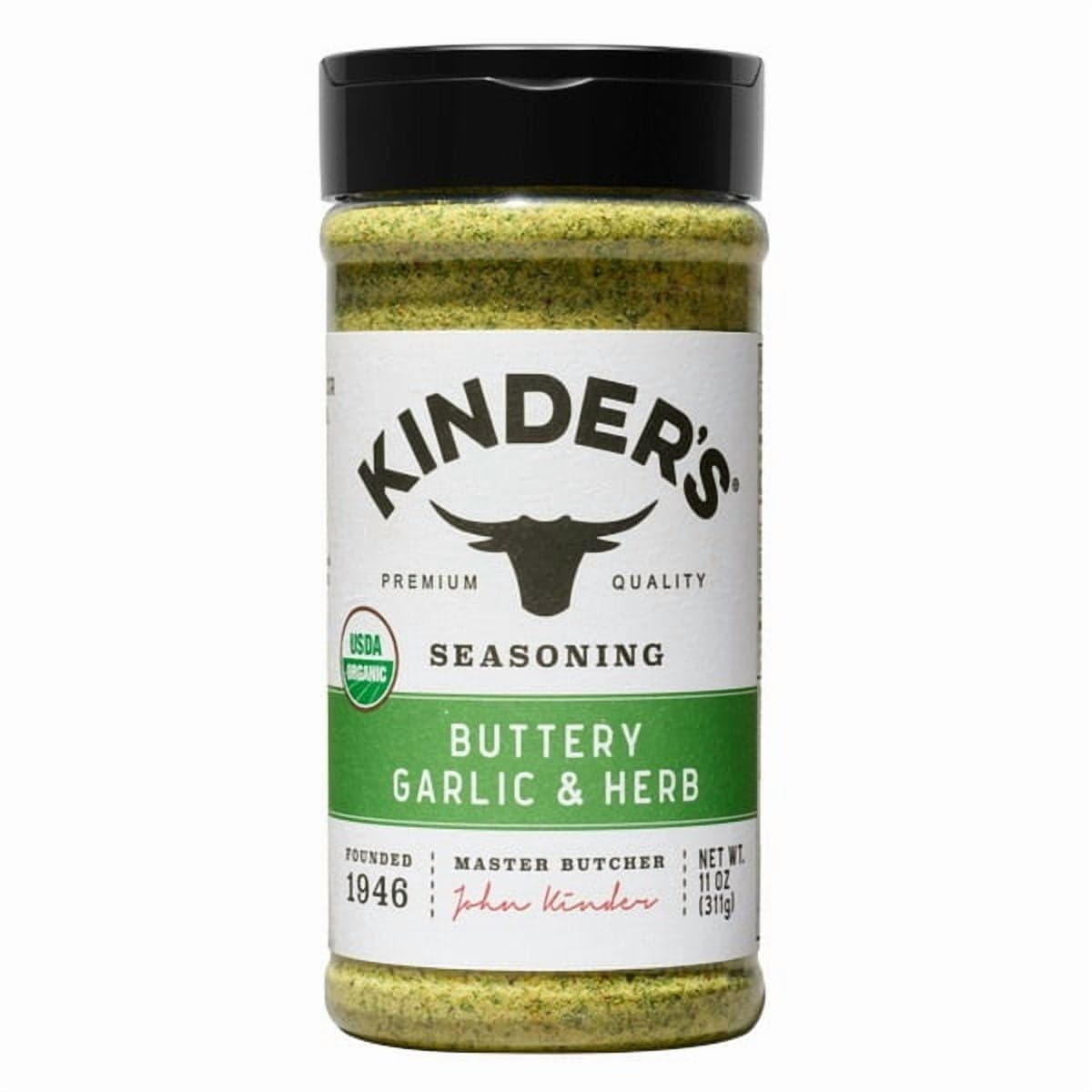
1. Kinder's Buttery Garlic and Herb Seasoning (Organic)
This is the desert-island pick. If you could only own one Kinder's seasoning for chicken, Kinder's Buttery Garlic and Herb would be it. The blend combines USDA organic garlic, parsley, chives, and real butter powder into a savory, aromatic coating that works on literally every cut of chicken.
We tested it on bone-in thighs (oven-roasted at 425°F), boneless breasts (grilled), and wings (air-fried), and it delivered every time. The garlic is pronounced but not sharp, the herbs add brightness without turning grassy, and the butter base gives it a restaurant-quality richness. It's especially strong on whole roasted chicken—rub it under the skin before roasting and you'll get crispy, golden skin with layers of savory flavor.
Best for: Roasted chicken, grilled breasts, weeknight thighs, anything you want to taste like it came from a rotisserie shop.
Pro tip: Mix it with olive oil and lemon juice for a quick marinade. Let chicken sit for 30 minutes before cooking and you'll get deeper penetration and more caramelization.
2. Kinder's Roast Chicken Garlic & Herbs
If Buttery Garlic and Herb is the all-arounder, Kinder's Roast Chicken Garlic & Herbs is the specialist. This blend was purpose-built for whole birds and bone-in cuts, with a savory, herbaceous profile that tastes like Sunday dinner.
The difference? This blend leans heavier on sage and thyme, giving it a more traditional poultry-seasoning character. It's outstanding on spatchcocked chicken, where you want deep, herbal flavor that complements crispy skin. We also loved it on chicken quarters cooked low and slow on the grill—it builds complexity as it cooks and never turns bitter.
Best for: Whole roasted chicken, spatchcocked birds, bone-in thighs and drumsticks, anything you're cooking with the skin on.
Pro tip: Season your chicken the night before and let it sit uncovered in the fridge. The salt will dry-brine the meat, and you'll get crisper skin and juicier meat.
3. Kinder's Grilled Chicken Seasoning
This is the workhorse blend for boneless, skinless chicken breasts—the cut most people struggle to season well. Kinder's Grilled Chicken Seasoning combines paprika, garlic, onion, and a hint of citrus into a balanced, slightly smoky profile that prevents the dreaded bland-grilled-chicken syndrome.
We tested it on pounded chicken cutlets (grilled hot and fast), meal-prep chicken breasts (baked at 375°F), and sliced chicken for salads and wraps. The blend creates a light crust when grilled and stays flavorful even when reheated—a huge win for meal prep. It's also low enough in salt that you can use it generously without oversalting lean cuts.
Best for: Grilled chicken breasts, meal-prep chicken, chicken Caesar salads, anything you're slicing or dicing after cooking.
Pro tip: Coat chicken breasts in a thin layer of mayo before seasoning. The fat helps the seasoning stick and keeps the meat moist on the grill.
4. Kinder's Woodfired Garlic Seasoning
If you want big, bold garlic flavor with a hint of smoke, Kinder's Woodfired Garlic delivers. This blend combines roasted garlic, black pepper, and a subtle woodsmoke note that mimics the flavor of chicken cooked over charcoal.
We found this seasoning particularly strong on dark meat—thighs, drumsticks, and wings—where the richer chicken flavor can stand up to the assertive garlic. It's also excellent on chicken cooked in cast iron or on a hot grill, where you want a charred, crispy exterior. The woodfired element isn't overpowering; it just adds depth and makes people ask, "Did you smoke this?"
Best for: Grilled thighs, wings, chicken skewers, anything you want to taste like it came off a live-fire grill.
Pro tip: Use this as a finishing seasoning too. Toss grilled chicken pieces in a little melted butter and a pinch of Woodfired Garlic right before serving for an extra layer of flavor.
5. Kinder's Lemon Butter Dill Seasoning
Chicken and lemon is a classic pairing, and Kinder's Lemon Butter Dill nails it. This blend combines bright citrus, herbaceous dill, and buttery richness into a seasoning that tastes fresh and indulgent at the same time.
We tested it on pan-seared chicken breasts, baked chicken tenders, and grilled chicken thighs, and it shined brightest on lighter preparations. It's especially good on chicken that you're serving with rice, pasta, or vegetables—the lemon and dill add brightness that cuts through richness and makes the whole plate feel cohesive. It's also one of the few Kinder's blends that works well on chicken salads and cold chicken dishes.
Best for: Pan-seared chicken, baked chicken, chicken piccata-style dishes, chicken served over rice or pasta.
Pro tip: After cooking your chicken, deglaze the pan with a splash of white wine or chicken stock, then whisk in a pat of butter and a pinch more Lemon Butter Dill for an instant pan sauce.
6. Kinder's The Blend (Salt, Pepper, Garlic)
Sometimes you just want clean, simple flavor, and Kinder's The Blend is the answer. This is Kinder's take on SPG (salt, pepper, garlic)—a minimalist blend that enhances chicken without adding competing flavors.
We used The Blend on chicken breasts destined for tacos, sandwiches, and grain bowls, where you want seasoned chicken that plays well with other bold ingredients. It's also the best choice when you're using a sauce or marinade and just need to season the meat itself. The garlic is mellow, the pepper has a nice bite, and the salt level is spot-on for lean cuts.
Best for: Chicken tacos, sandwiches, bowls, any dish where chicken is the base and you're layering other flavors on top.
Pro tip: Season chicken with The Blend, then finish with a squeeze of lime and fresh cilantro for a quick Tex-Mex flavor profile.
7. Kinder's Hickory Brown Sugar Seasoning
This is the wildcard pick, but it earns its spot for one specific use: grilled or smoked chicken with a sweet, smoky crust. Kinder's Hickory Brown Sugar combines brown sugar, hickory smoke, and warm spices into a blend that caramelizes beautifully on the grill.
We tested it on bone-in chicken thighs (grilled indirect), drumsticks (baked then broiled), and whole chicken legs (smoked). The sugar creates a sticky, mahogany crust that tastes like barbecue without needing sauce. It's not an everyday seasoning—it's too sweet and assertive for simple preparations—but when you want chicken that tastes like it spent hours in a smoker, this delivers in 30 minutes.
Best for: Grilled or smoked chicken, barbecue-style thighs and drumsticks, chicken you're finishing with BBQ sauce.
Pro tip: Apply this seasoning toward the end of cooking or use indirect heat. The sugar can burn if exposed to direct high heat for too long.
How to Season Chicken Like a Pro
Great seasoning is only half the equation. How you apply it matters just as much. Here's what works:
Timing Matters
For quick-cooking cuts like chicken breasts or tenders, season 15–30 minutes before cooking. This gives the salt time to penetrate the surface and start breaking down proteins, which helps the meat retain moisture. For bone-in cuts or whole birds, season the night before and refrigerate uncovered. This dry-brines the meat and ensures every bite is flavorful.
Use Enough Seasoning
The most common mistake is underseasoning. Chicken is dense and mild—it needs more seasoning than you think. A good rule of thumb: use about 1 teaspoon of seasoning per pound of chicken. For bone-in cuts with skin, go heavier. The skin acts as a barrier, so season generously to ensure flavor reaches the meat underneath.
Add Fat for Adhesion
Dry seasoning doesn't stick well to dry chicken. Before seasoning, lightly coat your chicken with oil, melted butter, or even a thin layer of mayo. This helps the seasoning adhere and creates a better crust. For grilled or roasted chicken, the fat also promotes browning and caramelization.
Layer Your Seasoning
For maximum flavor, season in stages. Apply your base seasoning before cooking, then finish with a light sprinkle (and a pat of butter, if you're feeling generous) right before serving. This layering technique gives you both deep, cooked-in flavor and bright, fresh top notes.
Best Cooking Methods for Each Seasoning
Not every seasoning works equally well across all cooking methods. Here's a quick guide to matching blends with techniques:
- Grilling (direct heat): Grilled Chicken, Woodfired Garlic, The Blend. These blends can handle high heat and won't burn easily.
- Grilling (indirect heat) or smoking: Hickory Brown Sugar, Roast Chicken Garlic & Herbs, Buttery Garlic and Herb. These blends benefit from slower cooking that allows flavors to develop.
- Oven roasting: Roast Chicken Garlic & Herbs, Buttery Garlic and Herb, Lemon Butter Dill. These blends create excellent crust and fill your kitchen with amazing aromas.
- Air frying: Grilled Chicken, Woodfired Garlic, The Blend. These blends stick well and create a crispy coating without burning.
- Pan-searing: Lemon Butter Dill, Buttery Garlic and Herb, The Blend. These blends work well in a hot skillet and make excellent pan sauces.
- Slow cooking or braising: Roast Chicken Garlic & Herbs, Woodfired Garlic. These blends have enough depth to hold up to long cooking times.
Common Mistakes to Avoid
Seasoning Cold Chicken
Cold chicken straight from the fridge doesn't season evenly and won't cook evenly either. Let your chicken sit at room temperature for 20–30 minutes before cooking. This allows the seasoning to penetrate better and ensures the meat cooks through without drying out the exterior.
Skipping the Skin
If you're cooking bone-in chicken with skin, season under the skin too, not just on top. Gently separate the skin from the meat with your fingers, then rub seasoning directly onto the flesh. This ensures the meat itself is flavorful, not just the crispy skin.
Oversaucing
If you're using a sauce or glaze, apply it toward the end of cooking, not at the beginning. Seasoning should flavor the meat; sauce is the finish. If you coat chicken in sauce too early, the seasoning never has a chance to create a crust, and you'll end up with steamed, flabby skin.
Not Adjusting for Cooking Method
Seasonings with sugar (like Hickory Brown Sugar) need gentler heat or indirect cooking to avoid burning. Blends with dried herbs (like Roast Chicken Garlic & Herbs) can turn bitter if exposed to sustained high heat. Match your seasoning to your method, or adjust your heat accordingly.
Quick Chicken Recipes Using Kinder's Seasonings
20-Minute Buttery Garlic Chicken Breasts
Pound chicken breasts to even thickness. Coat lightly with olive oil and season generously with Buttery Garlic and Herb. Heat a cast-iron skillet over medium-high heat, add a tablespoon of butter, and sear chicken 6–7 minutes per side until golden and cooked through. Let rest 5 minutes, slice, and serve over rice or salad.
Sheet-Pan Roast Chicken Thighs
Toss bone-in, skin-on chicken thighs with olive oil and Roast Chicken Garlic & Herbs. Arrange on a sheet pan with halved baby potatoes and quartered onions. Roast at 425°F for 35–40 minutes until skin is crispy and potatoes are golden. One pan, zero cleanup, maximum flavor.
Grilled Lemon Dill Chicken Skewers
Cut chicken breasts into 1-inch cubes. Toss with olive oil, Lemon Butter Dill, and a squeeze of fresh lemon juice. Thread onto skewers and grill over medium-high heat, turning occasionally, until charred and cooked through (about 10–12 minutes). Serve with tzatziki and pita.
Air Fryer Woodfired Garlic Wings
Pat chicken wings dry and toss with a small amount of oil and Woodfired Garlic seasoning. Arrange in a single layer in your air fryer basket. Cook at 400°F for 22–25 minutes, shaking the basket halfway through. Finish with a drizzle of melted butter and extra seasoning.
Which Kinder's Chicken Seasoning Should You Buy First?
If you're new to Kinder's or building your collection, start with Buttery Garlic and Herb. It's the most versatile, works across every cooking method, and delivers consistent results whether you're feeding toddlers or hosting a dinner party. From there, add Grilled Chicken Seasoning if you meal-prep or cook a lot of boneless breasts, and Roast Chicken Garlic & Herbs if you cook whole birds or bone-in cuts regularly.
Once you've mastered those three, experiment with Lemon Butter Dill for lighter dishes and Woodfired Garlic when you want bold, smoky flavor. Hickory Brown Sugar and The Blend are situational players—grab them when you have a specific use case in mind.
Final Thoughts
The best Kinder's seasoning for chicken depends on what you're cooking and how you're cooking it. But across the board, Kinder's blends deliver restaurant-quality flavor without the guesswork. They're formulated to work—rich, balanced, and punchy enough to make chicken taste like something you'd order, not something you'd apologize for.
Whether you're grilling for a crowd, meal-prepping for the week, or just trying to make Monday-night chicken breasts less boring, the right seasoning makes all the difference. Start with one or two bottles, learn how they behave with your favorite cuts and cooking methods, and build from there.
Ready to upgrade your chicken game? Grab a bottle of Kinder's Buttery Garlic and Herb or Grilled Chicken Seasoning and taste the difference a real seasoning blend makes. Your weeknight dinners just got a whole lot better.
Shop the products mentioned in this article
Free shipping on every order. No minimums, no gimmicks.